
Quick Access
Applications
Quick Links
Goal 9. Industry, Innovation and Infrastructure
Innovation turns knowledge into infrastructure and industry. Özyeğin University combines a large portfolio of nationally funded engineering research with an entrepreneurship ecosystem, an industry transformation centre opened in 2025, and a public platform on the ethics and governance of artificial intelligence.
Source: Özyeğin University SDG Report 2025, SDG 9 chapter, page 51 (PDF).
Source: Özyeğin University SDG Report 2025, SDG 9 chapter, page 52 (PDF).
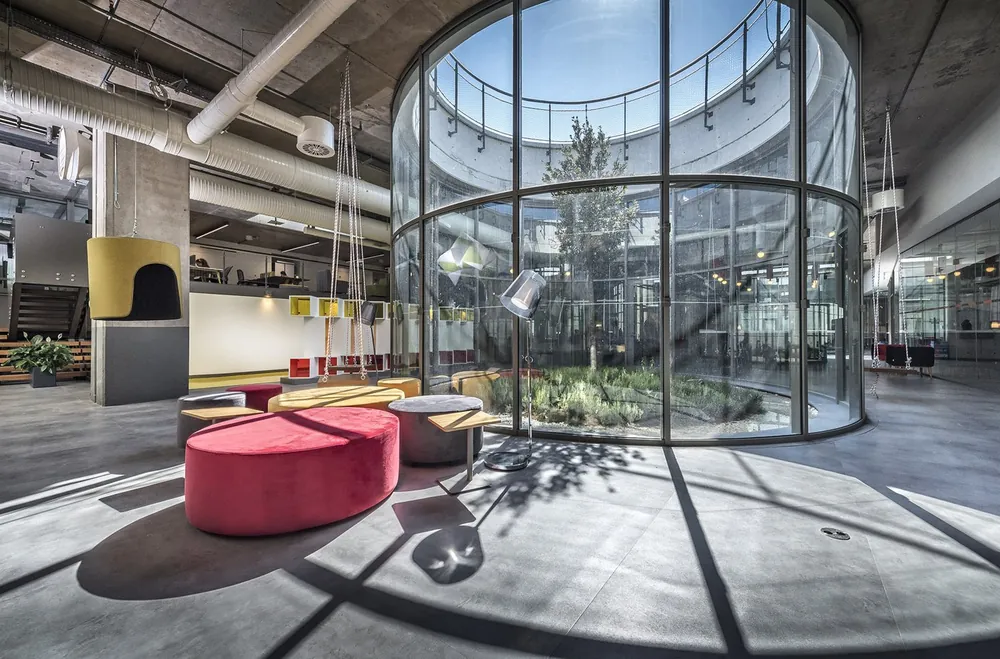
Engineering and technology students learn by building. OzU IEEE runs technical training including MATLAB for engineering with FİGES, Electronics and Data Science in Python. OpenFab supports courses and student projects with prototyping and digital fabrication, and MakeTogether, the interdisciplinary maker gathering, brings different student communities together to make things. MAKEngineer gives engineering students project-based practice across fields.
Students also compete. The ÖzÜ Rover planetary exploration vehicle team, and teams in the CFA Institute Research Challenge and the INFORMS analytics competition, test their work internationally. LeanLab, supported by the Istanbul Development Agency, turns academic knowledge into ventures through a camp and five weeks of mentoring, and intellectual property training and a student patent competition build an innovation culture.
AviAthon 2025, an aviation project competition with İGA at Istanbul Airport, 5 May 2025.
Source: Özyeğin University SDG Report 2025, SDG 9 chapter, page 53 (PDF).
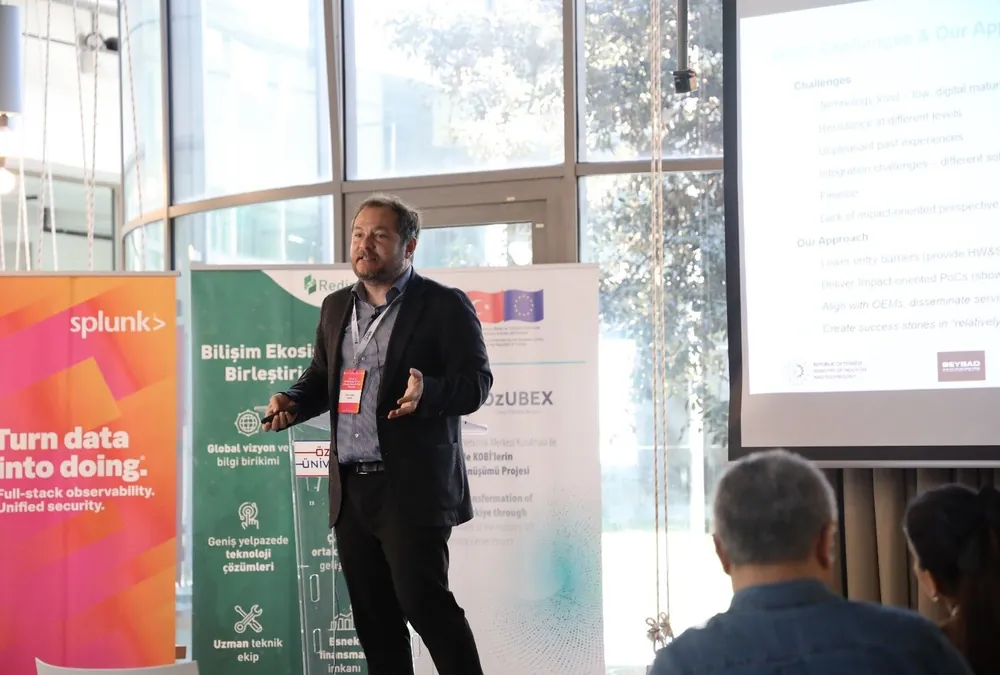
The ÖzÜ-X building is the University's innovation infrastructure. It houses the Entrepreneurship Centre with Girişim Fabrikası and OpenFab, the Technology Transfer Office, the GE Türkiye co-innovation centre opened in 2018, and ÖzÜBEX, and is open around the clock.
Governance keeps pace with technology. An AI Committee coordinates internal AI processes, separate from the external AI Platform. An Intellectual Property Board decides on patent applications and commercialisation. The Pioneering AI Initiative committed the University to 50 full-time and 100 visiting academic posts. Business continuity is certified under ISO 22301, alongside the University's other management systems. Karbonmetre and Sumetre let staff and students measure their individual carbon and water footprints.
ÖzÜBEX, inaugurated on 30 May 2025, providing 1,000 square metres of equipment, training and consultancy for SMEs, and running the Twin Transition Project on digital and green transformation.
Source: Özyeğin University SDG Report 2025, SDG 9 chapter, page 54 (PDF).
Özyeğin convenes the public conversation on artificial intelligence. The OzU AI Platform brings together senior executives from its 24 member institutions, leading companies and universities, and academics to explore sector applications and ethical governance.
The University also builds regional innovation capacity. The Istanbul Game Entrepreneurship Academy (9999in1 Space), supported by the Istanbul Development Agency and prepared by Çekmeköy Municipality with Özyeğin as partner and OYUNDER participating, has provided over 2,000 hours of training to around 400 people. The Istanbul Design Institute and ÖzÜBEX serve firms in the surrounding region directly. The Technology Transfer Office mentors other universities setting up their own offices under TÜBİTAK programmes, and briefs industry on TÜBİTAK support. IWROBOTX, an autonomous sea-surface cleaning vehicle from the ecosystem, won the Mercedes-Benz StartUP Jury Special Award.
Private sector and academia convened on AI, 13 June 2025.
The AI Platform opening meeting, October 2025, with technology leaders.
AI Week, 13–17 October 2025: more than twenty panels, workshops and talks opening the effects of artificial intelligence on education, ethics, entrepreneurship and social transformation to the public.
Source: Özyeğin University SDG Report 2025, SDG 9 chapter, pages 55–56 (PDF).
European and National Projects
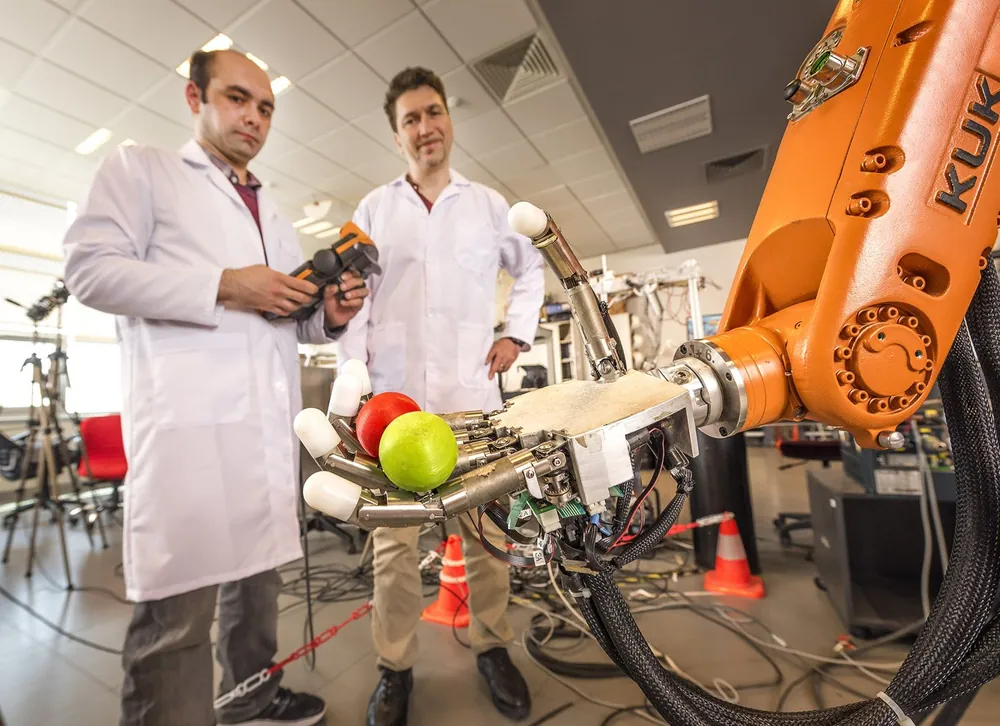
Engineering research at Özyeğin is supported by an unusually large TÜBİTAK 1001 portfolio. Current projects cover 6G upper mid-band communication, air and space networks, multi-layer UAV systems, deep learning for image matching and biological sequences, physics-informed machine learning for turbulence, negotiating AI agents and bin packing for virtual machines. A TÜBİTAK 1005 project develops a control unit for 48V automotive architecture.
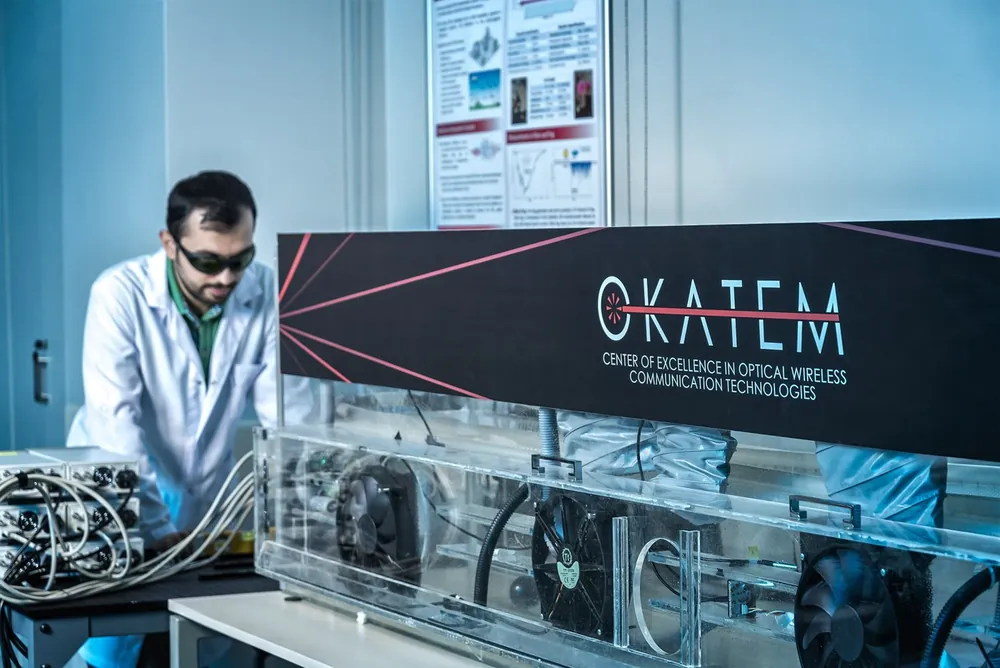
Research centres include NGAI, PAIR, OKATEM, the AI Law Laboratory, the Additive Manufacturing Alloys Research Centre, which hosted the 10th International Conference on Ultrafine Grained and Nanostructured Materials, and the Technology Products Research Centre, which works with Vestel Electronics. Research turns into companies: Hyperion Techs develops light-based wireless communication, and the University has commercialised LED and natural colouring technologies. HEIght, under the EIT HEI Initiative, works on entrepreneurship provision for international students, and the Visiting Researchers Programme hosts academics from Amazon, OECD, Max Planck, Kyoto and other institutions.
The University filed 9 national and 9 international patent applications and was granted 3 national and 5 international patents. It started 29 new university–industry projects and won 14 new TÜBİTAK ARDEB and 3 new EU Framework Programme projects. 51.1 per cent of faculty members had an active research project.
Three internal seed funds launched in 2024–2025. The Seed Research Grant Program funded 34 of 65 applications in its first two rounds, and the Societal Impact Seed Grant Program funded 10 of 14. One seed project grew into AGRICOLAB, which won funding from the EU–Türkiye Climate Change Grant Programme. In 2025, 54.7 per cent of the University's research projects (29 of 53) were explicitly aligned with the SDGs.
2,620 of the University's 3,668 Scopus outputs in 2016–2025 (71.4 per cent) spanned two or more subject-area clusters. In 2021–2025 these interdisciplinary publications had a field-weighted citation impact of 2.16, against an institutional average of 1.29, and about 53 per cent of accepted research projects in 2023–2025 were classified as interdisciplinary by the Technology Transfer Office.
Scopus-indexed outputs mapped to this goal in SciVal.