
Quick Access
Applications
Quick Links
Goal 7. Affordable and Clean Energy
Clean energy is central to tackling climate change. Özyeğin University met all of its 2025 electricity demand from certified renewable sources, manages energy under ISO 50001, and has run European energy research from FP7 to Horizon Europe, from efficient buildings to battery storage.
Source: Özyeğin University SDG Report 2025, SDG 7 chapter, page 41 (PDF).
Source: Özyeğin University SDG Report 2025, SDG 7 chapter, page 42 (PDF).
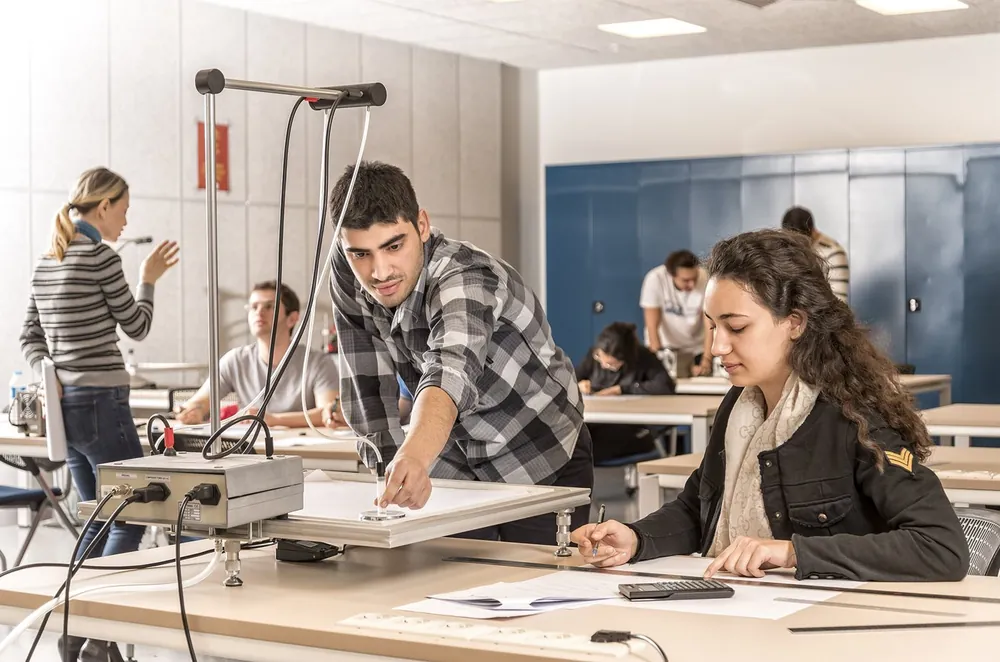
Energy is taught through doing. The TRIBE project, the University's first Horizon 2020 research and innovation action, used a social game to train behaviour for energy efficiency in pilot public buildings. Incoming students receive a sustainability orientation that covers energy alongside waste and water, and environment, energy and climate content runs through courses and design studios.
Carbon itself became a teaching tool in 2025. On 21 March 2025 the FE101 Being an Engineer course hosted representatives of Committed, a carbon offsetting firm, and the Sustainability and QHSE Department presented the University's institutional carbon footprint. The session was the first course at Özyeğin delivered carbon-neutral. The Sustainability Ideathon and Future Greens encourage students to develop climate and energy solutions and sustainable business models.
TRIBE, behavioural training for energy efficiency, delivered as a research-linked education programme.
Source: Özyeğin University SDG Report 2025, SDG 7 chapter, page 43 (PDF).
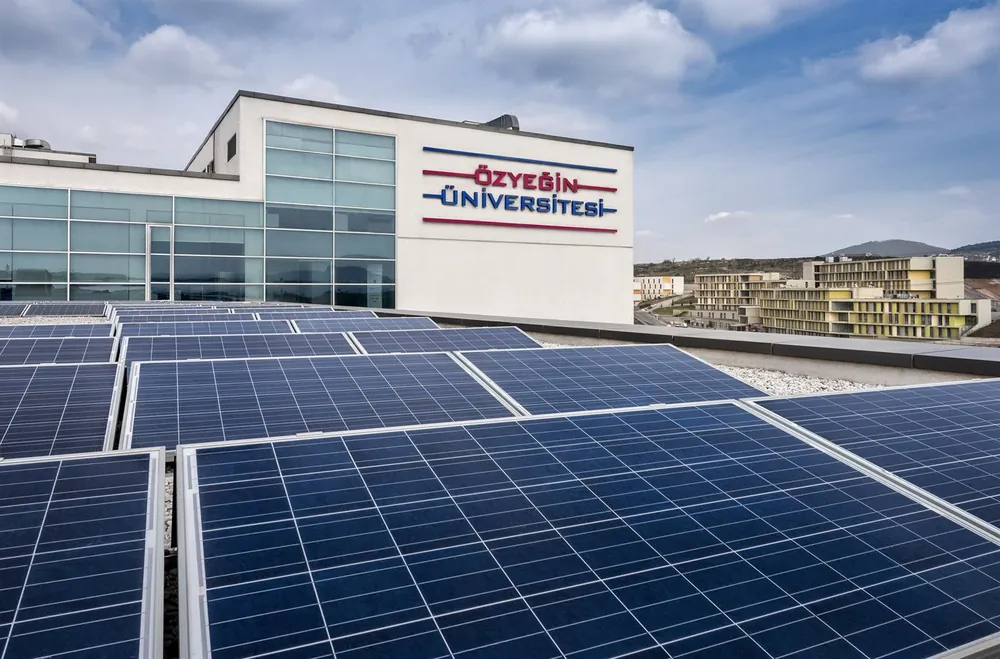
Since 2024, all electricity purchased by the University has come from renewable sources, documented through I-REC certificates, and solar energy is also generated on campus. Energy use is managed under ISO 50001, certified in March 2024, which requires energy reviews and objectives. Three buildings hold LEED Gold certification at building level.
Research has shaped the campus. The ScOLa building was built as the Turkish application of the EU NEED4B project on energy efficiency in new buildings and won a national productivity award in 2019. Through LEGOFIT, a battery energy storage system was integrated into a residence hall with Vestel Mobility. Karbonmetre lets individuals measure their own carbon footprint, and environmental data are shared openly.
All electricity consumed in 2024 and in 2025 was sourced from renewable generation and certified through I-REC.
ISO 50001 Energy Management System, certified March 2024, under which campus energy performance is measured and improved.
Specified buildings on the Çekmeköy campus — AB1, AB2 and the Student Centre — hold LEED Gold. The certification is held at building level.
In the 2025 UI GreenMetric World University Rankings the University placed 89th of 1,745 universities and was Türkiye's top foundation university for the seventh consecutive year, with renewable energy and sustainable transport among its strongest areas.
Energy is managed under ISO 50001 by the Sustainability and QHSE Directorate with Technical Services, which set baselines and monitor energy performance indicators. Part of the campus electricity comes from on-site solar panels. The 2029 target is a 10.57 per cent cut in energy use per person, to 0.481 TEP a year. The web-based Carbon Meter, launched in 2025, lets students and staff calculate their own footprints, and a Campus Holiday energy-saving programme reduces use when buildings are quiet.
Real-time energy monitoring of every campus building through SCADA; conversion to LED lighting in all classrooms of AB2, all but one classroom of AB1, the car park fire stairs and the AB3 covered car park lift halls and stairs; battery energy storage integrated with solar panels; load balancing in electrical panels to cut line losses, with compensation and reactive power optimisation; stronger monitoring and reporting through building automation; and internal energy-saving awareness and training meetings.
Source: Özyeğin University SDG Report 2025, SDG 7 chapter, page 44 (PDF).
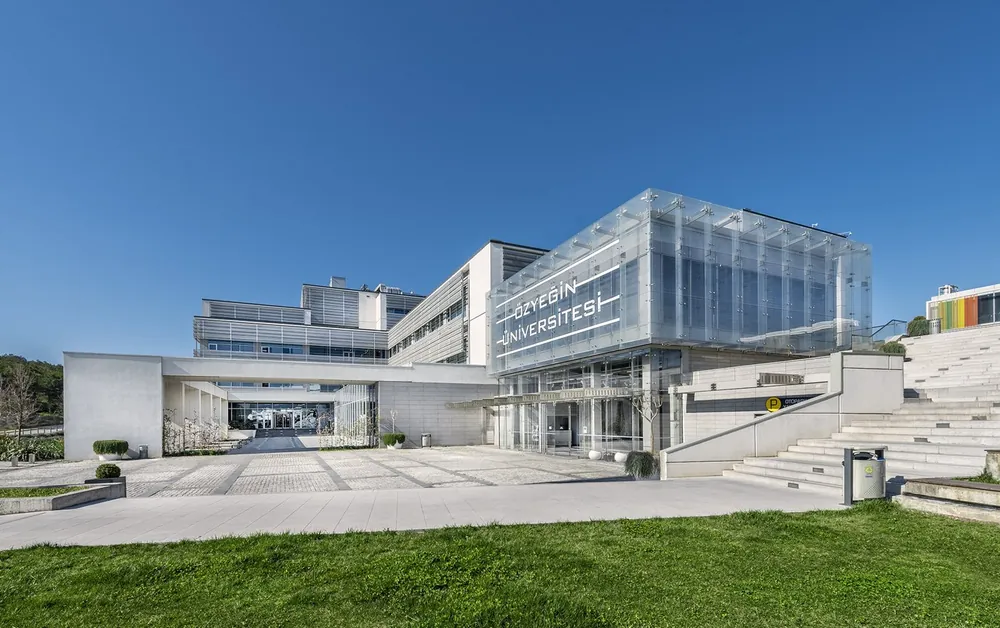
Özyeğin's energy engagement is aimed mainly at industry. The ÖzÜBEX Industry Transformation Center was inaugurated on 30 May 2025 in the presence of the Minister of Industry and Technology. Established with the White Goods Suppliers Association (BEYSAD) under an EU and Türkiye co-funded project, it occupies 1,000 square metres on campus and provides SMEs with training, consultancy, R&D, prototyping and testing for their digital and green transformation.
EÇEM signed an energy storage agreement with Vestel Mobility on 25 February 2025, and with TÜSİAD produced Türkiye's Industrial Energy Efficiency Outlook on industrial efficiency potential and policy. The TRAFORM project worked with eight electricity distribution companies to improve grid efficiency through transformer data. SustainHUB Academy brings energy and climate content to business, and the University works with Women in Renewable Energy to widen women's participation in the sector.
ÖzÜ–WiRE, collaboration with Women in Renewable Energy on visibility and participation of women in the sector.
Source: Özyeğin University SDG Report 2025, SDG 7 chapter, page 45 (PDF).
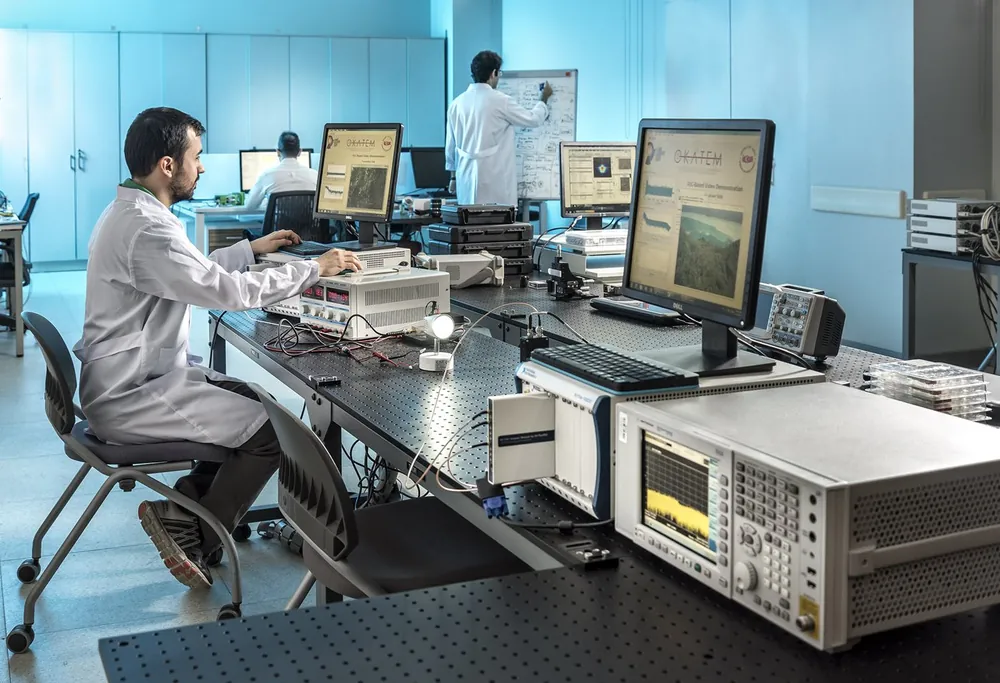
European and National Projects
EÇEM, founded in 2009 as the University's first research centre, works where energy, environment and economy meet, alongside the Integrated Energy Initiative and the EVATEG centre for energy-efficient electronics and lighting. European projects have run from FP7 through Horizon 2020: NEED4B on energy efficiency in new buildings, TRIBE on behaviour, and LEGOFIT on storage.
ReBuild-3D, coordinated by Özyeğin with EU funding and partners including SINTEF and CARTIF, develops circular, low-carbon construction materials and digital production. PRECISE, within the EU CONNECT-NM consortium, uses physics-informed AI to predict corrosion in nuclear materials. With 95 publications mapped to SDG 7 in 2021–2025, energy is the second largest goal in the University's research portfolio after industry and innovation.
Scopus-indexed outputs mapped to this goal in SciVal.