
Quick Access
Applications
Quick Links
Goal 4. Quality Education
Quality education is the University's founding purpose. Özyeğin University builds competences as well as knowledge through its Transformative Education Programme, measures what its student programmes actually produce, and opens learning to schools, teachers, professionals and its neighbourhood.
Source: Özyeğin University SDG Report 2025, SDG 4 chapter, page 26 (PDF).
Source: Özyeğin University SDG Report 2025, SDG 4 chapter, page 27 (PDF).
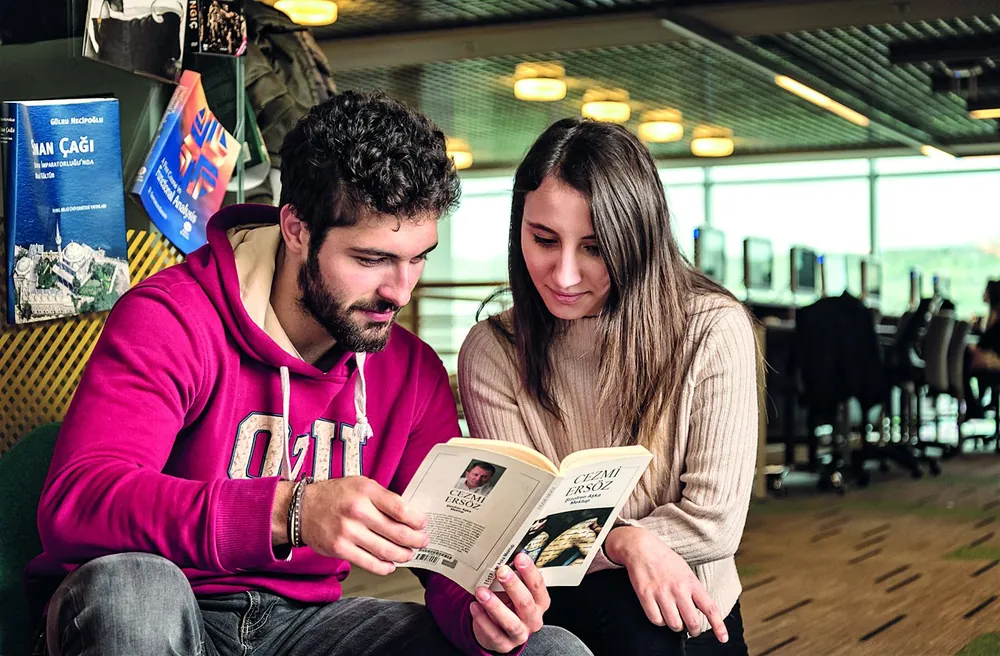
The Transformative Education Programme is the backbone of learning at Özyeğin. It defines ten core and thirty sub-competencies that every student should gain and delivers them through common courses, TRL courses and other activities. Progress is recorded on a Transformative Education Transcript and Portfolio, so that competencies such as responsible citizenship and teamwork are visible alongside grades.
The programme keeps renewing itself. New TRL courses teach learning with artificial intelligence and change management. Placeless Courses took students out of the classroom on routes through Dolmabahçe, Taksim and Galata in November 2025 and through Cappadocia in December 2025. Maker programmes such as MAKEntas, MAKEngineer and MakeGTT give design, engineering and gastronomy students hands-on project work, and applied education partnerships with Dedeman, Bonna Porselen, Pegasus and Turkish Airlines bring industry problems into courses.
Foundation courses with an impact report on file. Timely completion of SEC 101 carries the effects above, together with 2.07 times the rate of participation in student life and satisfaction 8.43 points higher.
Field-project courses.
The Peer Support Programme, with LibCal usage analysis.
Language Circles, the Undergraduate Summer Research Programme and the High School Summer Research Programme, reaching 2,500 to 2,800 prospective students annually through summer schools and research internships.
The Law Faculty moot court programme, MakeTogether, and student society training in debate, CV preparation and career development.
The Sandpit crowdfunding simulation, supported by the Transformative Education Seed Fund, embedded into BUS 102 and ENTR 305.
In 2025, 150 students went abroad through Erasmus+ and 19 through global exchange, 100 exchange students came to Özyeğin, and 26 students did internships abroad. Undergraduate satisfaction rose from 69.9 in 2024 to 74.1 in 2025, and 84 per cent of instructors scored 4 or above in student course evaluations. In 2025–2026, 43 active student clubs organised 465 events. Courses Without Walls ran eight faculty-led learning trips, which drew 508 applications. Erasmus+ blended intensive programmes and collaborative online international learning added joint courses with partners abroad.
Every first-year student takes SEC 101 and TRL 101/103, compulsory courses that introduce the Transformative Education Programme and environmental sustainability, and ENG101 and ENG102 have been taught in the context of the SDGs since 2020–2021. In the 2024–25 academic year, 443 of the University's 1,142 courses carried sustainability content, with a target of 600 by 2029. In the student satisfaction survey, students rated the University's success in building sustainability awareness at 3.1 out of 4.
In 2024–2025, 320 students from seven faculties worked with 85 pupils of Nişantepe Middle School on high school entrance exam preparation, English and sport, as part of the TRL202 Responsible Citizenship course.
Source: Özyeğin University SDG Report 2025, SDG 4 chapter, page 28 (PDF).
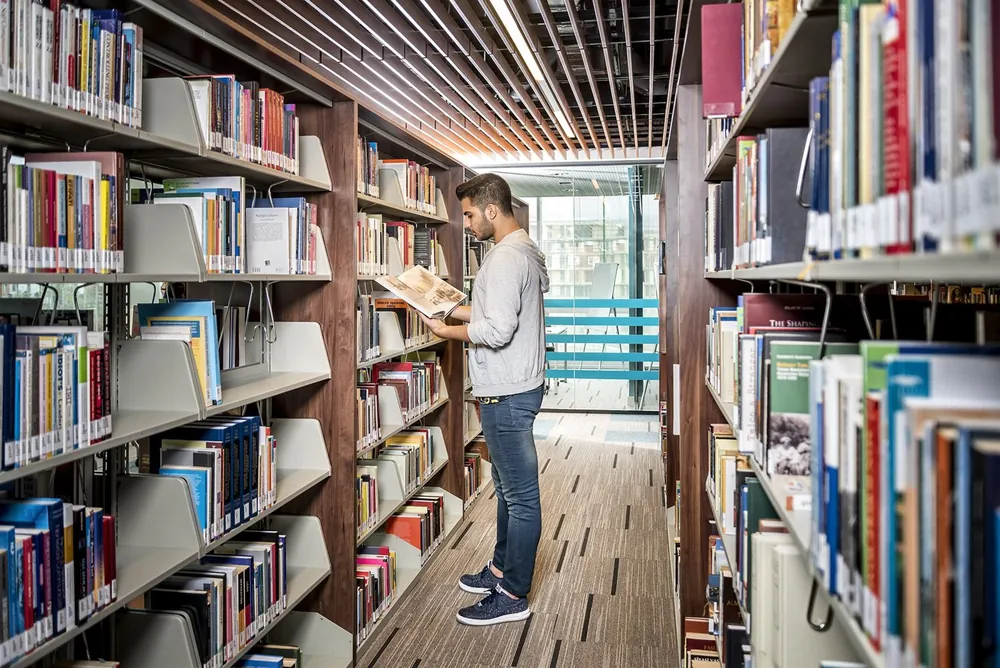
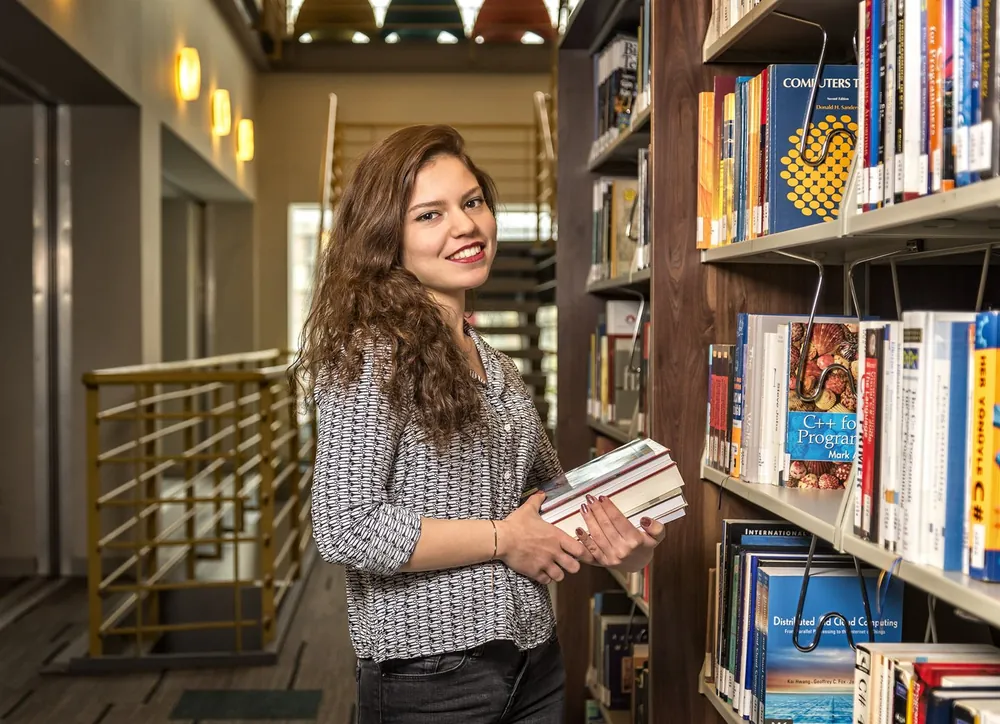
Teaching quality is supported by dedicated structures. The Office of Learning and Teaching Excellence (OLTE) supports pedagogy and teaching practice and runs the OzU TLT grants for teaching and learning research. The Student Development and Experience Department designs the transformative student experience. The Transformative Education Seed Fund finances course and programme designs aimed at measurable change; recent examples embedded a crowdfunding simulation in business courses and built experiential learning into a law course through court visits and simulations.
Quality is externally checked. Özyeğin has held YÖKAK institutional accreditation, with continuation confirmed at the 2025 interim review, and has published an Institutional Internal Evaluation Report every year since 2016. A Quality Commission of all deans and directors manages the quality cycle, and the University obtained ISO 9001:2015 certification in 2025. Programme accreditations include AACSB for business, MÜDEK for engineering, MİAK for architecture, ACPHA for hotel management, EAQUALS for the School of Languages, and AABI for aviation management and pilot training, the first such programmes accredited in Türkiye and Europe.
ÖGDB — the Student Development and Experience Department, designing the transformative student experience and running the volunteering and development programmes.
The Academic Quality Assurance Office, carrying international accreditation and quality processes.
The Institutional Internal Evaluation Report (KİDR), published annually without interruption since 2016, and the Quality Commission of all deans and directors that maintains its evidence base.
Source: Özyeğin University SDG Report 2025, SDG 4 chapter, page 29 (PDF).
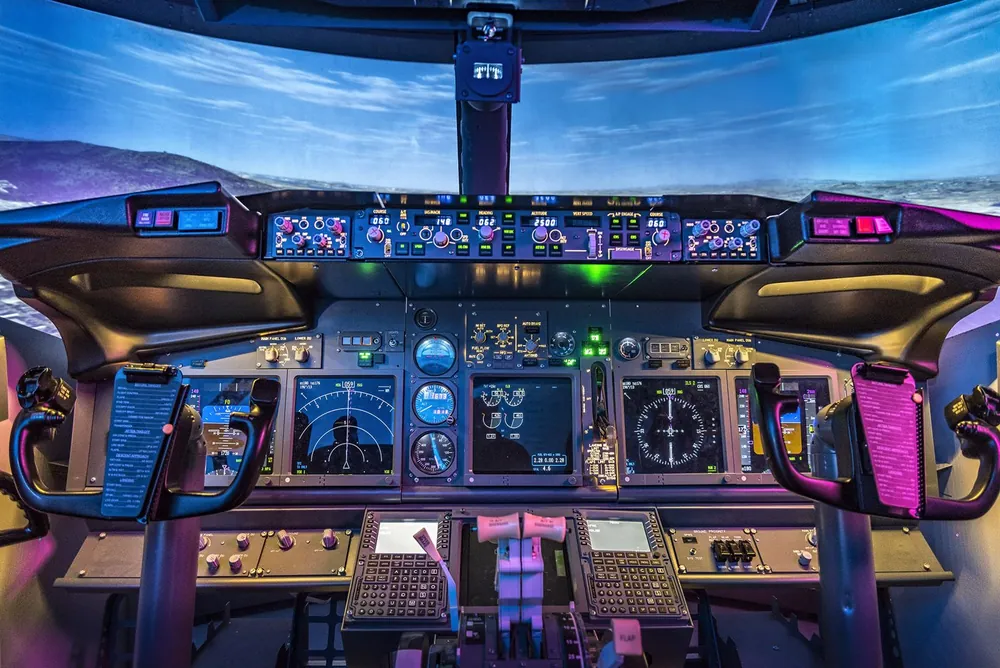
Özyeğin opens learning to people who are not its students. OzU AI Week, held from 13 to 17 October 2025, offered more than twenty public panels and workshops on artificial intelligence in fields from finance and agriculture to gender equality. The Continuing Education Academy designs programmes for companies and public bodies, the ÖzÜ Façade Academy trains professionals with European partners, and SustainHUB Academy, run with SKD Türkiye, began its second cohort in September 2025.
Schools are a particular focus. AI@K12 taught high school students to learn effectively with AI, and AI@PDR trained school guidance counsellors. OpenFab runs maker training in coding, 3D design and electronics for children and young people from outside the University, and in 2025 held a workshop with thirty children from Nişantepe. The High School Summer School, campus visits from more than two hundred institutions and the OzU Open debating tournament bring secondary students into university life. With Sabancı and Boğaziçi universities, a TÜBİTAK 2237-A programme trained thirty lecturers from twenty-one universities in using AI in higher education.
Effective Learning with Artificial Intelligence, delivered to high-school students, covering AI literacy and common tools.
Artificial Intelligence in Designing Learning Environments and Experiences, delivered to school guidance counsellors, including prompt engineering.
TÜBİTAK 2237 training project.
The 23 April Children's Day festival, delivered by SEC 202 students with Duyarlı ÖzÜ.
KEÇİ, diversifying education in the village.
OpenFab teaches coding, 3D design and printing, laser prototyping and electronics to children and young people from outside the University, and in 2025 ran a production workshop with 30 children from Nişantepe.
The Global Leadership Academy, established with the Global Turks Foundation, 28 November 2025.
The high-school network, including outreach and guidance, reached 9,998 students across 185 institutions in the period.
Under a memorandum of understanding with International House Türkiye, the School of Languages hosts Cambridge CELTA teaching certificate courses. OpenFab's maker camps teach coding, 3D design and prototyping to children and young people from outside the University. On 14 May 2025 the University shared its campus sustainability practice with the community of a TÜBİTAK Science High School, and on 30 May 2025 it held the SADE Sustainability Workshop on corporate sustainability practice.
Source: Özyeğin University SDG Report 2025, SDG 4 chapter, page 30 (PDF).
European and National Projects
Özyeğin studies its own teaching. The OzU TLT grants fund research on teaching and learning, and the Transformative Education Seed Fund funds experiments in course design, each with a closing presentation of results.
Further research addresses specific groups and settings: an academic needs analysis of international students, an evaluation of OLTE's AI training, and a TÜBİTAK 4005 programme that developed innovation competences among teachers. The Undergraduate and High School Summer Research Programmes bring students into research early, building research culture from the first year.
Teaching and learning research grants awarded across the 2024–2025 and 2025–2026 cycles, each closing with a presentation of results to colleagues.
BRIDGE, an Erasmus+ Jean Monnet Centre of Excellence announced in December 2025, adding new courses and a Democracy Laboratory. Placeless Courses, experiential learning outside the classroom, with routes through Dolmabahçe, Taksim and Galata (November 2025) and Cappadocia (December 2025).
the International Student Academic Needs Analysis · a joint project with Sabancı University, ethics approval on file · the evaluation report on OLTE's AI training programmes · an innovative education programme in facade design, 17 February 2025.
Scopus-indexed outputs mapped to this goal in SciVal.