
Quick Access
Applications
Quick Links
Goal 3. Good Health and Well-being
Health and well-being depend on care, prevention and the conditions people live and work in. Özyeğin University supports its own community through on-campus health, counselling and sports services, opens therapy and sport to its neighbours, and researches health technologies, child development and the mental load of work.
Source: Özyeğin University SDG Report 2025, SDG 3 chapter, page 21 (PDF).
Source: Özyeğin University SDG Report 2025, SDG 3 chapter, page 22 (PDF).
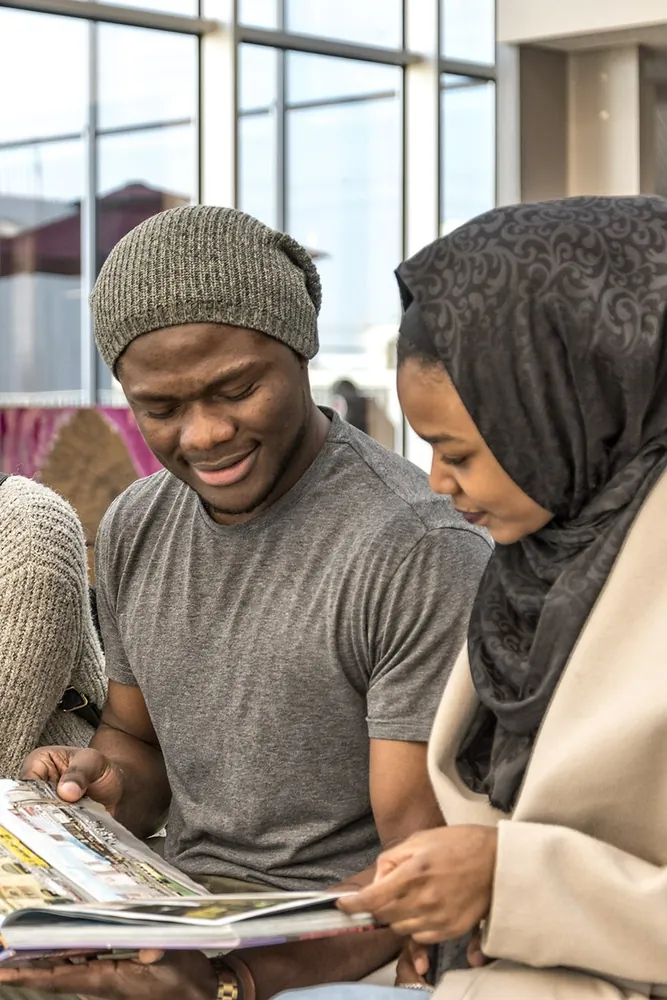
Well-being at Özyeğin is supported student to student as much as by professionals. The Peer Counselling Programme trains students in problem solving and decision making and runs an information portal. The 360 Counselling workshops cover academic, social and personal development.
Health literacy is taught directly. The twenty-first-century competencies series includes a course on addiction in the contemporary world, offered in Turkish and English, and mental health information materials reach all students. Duyarlı ÖzÜ meetings have brought experts on peer bullying and on healthy relationships to campus. Student sports clubs in sailing, rowing and diving, inter-faculty tournaments, and arts events organised by student societies complete a picture of well-being that is not limited to clinical care.
Earthquake Simulation Truck on campus, May 2025.
Source: Özyeğin University SDG Report 2025, SDG 3 chapter, page 23 (PDF).
The campus has its own health infrastructure. The Health Centre provides health services and emergency response, the Psychological Development Unit offers counselling for student mental health, and the Sports Centre gives students and staff access to extensive sports facilities. Automated external defibrillators are in place at 17 locations across the campus and residences. Staff well-being is organised as a set of practices: use of the sports facilities, regular pilates and swimming sessions, access to health services and HR arrangements that improve working conditions. Residence hall staff are trained in psychological first aid and crisis management, and the University's crisis intervention guide has been revised.
Occupational health and safety is certified and governed. The University holds ISO 45001:2018 and is overseen by an HSE Committee, the first at a Turkish university, which reports to the Rectorate.
The British Safety Council recognised the University's safety performance, as the only university in Türkiye.
From their first day, employees are covered by private health and life insurance that extends to spouses and dependent children. The leave framework includes menstrual leave, leave for a child's first day of school and caregiving leave.
Source: Özyeğin University SDG Report 2025, SDG 3 chapter, page 24 (PDF).
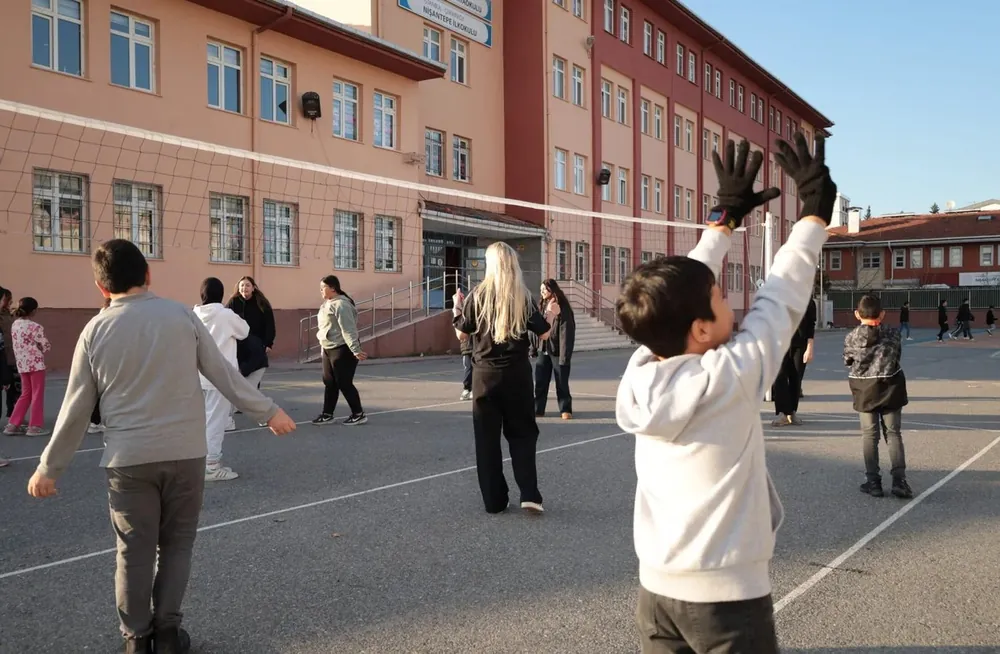
Özyeğin's health outreach reaches people who would otherwise be hard to reach. Beyond Adventure has run every year since 2019, pairing children with special needs one-to-one with student volunteers in sports and arts workshops. ÖzÜÇAM, the Couple and Family Centre, has delivered more than 10,000 free or low-cost therapy sessions to over a thousand people since 2017, most of them from outside the University.
Sport and health campaigns are used as a bridge to the neighbourhood and to schools. The ÖzÜ Cup inter-high-school sports festival brings teams to campus, and the Yaklaş 2030 Nişantepe sports project connects residents with active living. Yeşertip Yaş Alıyoruz works on healthy ageing, and the ÖzÜ and AÇEV Marathon is run as a joint public event.
Kızılay blood and stem cell donation drives, 9–10 April 2025, with the Turkish Red Crescent.
On 11 June 2025 Prof. Ayşenil Belger spoke publicly on chronic stress in children and young adults.
Source: Özyeğin University SDG Report 2025, SDG 3 chapter, page 25 (PDF).
European and National Projects
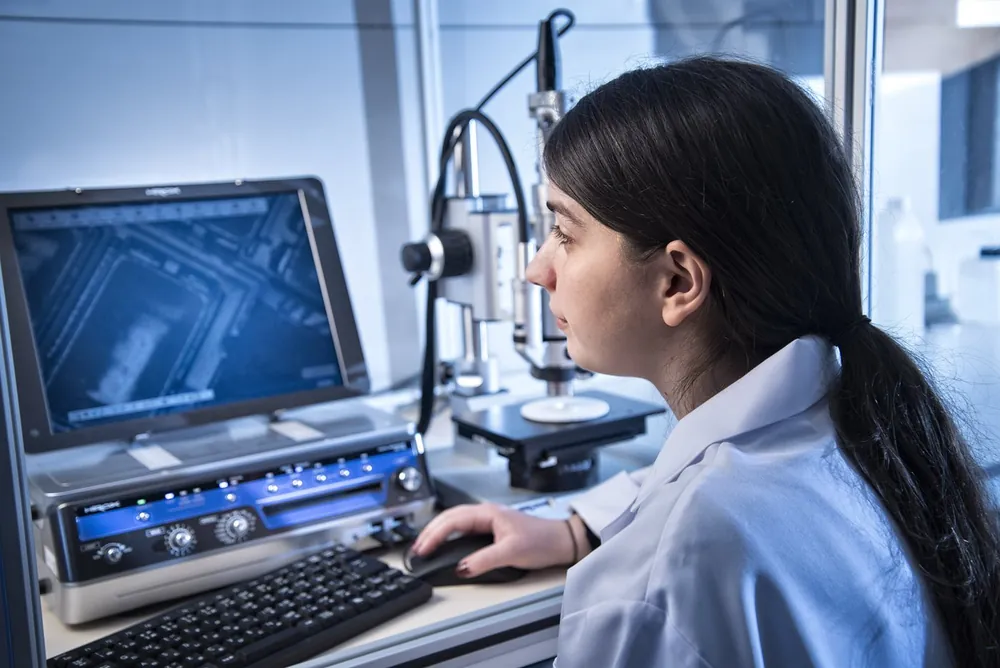
Health research at Özyeğin sits where engineering meets medicine. ÖzÜ HealthTech (DİSAM) is the University's interdisciplinary health technology centre. TÜBİTAK 1001 projects are developing a patient-specific cervical orthosis, autonomous suturing for surgical robots, and management systems for reusable surgical instruments integrated with operating-room scheduling. The Co-Ex exoskeleton project, running since 2015, and the AnkleMech rehabilitation mechanism address mobility.
The behavioural and social side is equally active. A TÜBİTAK project studies risk and protective factors in the psychosocial well-being of Syrian refugee adolescents, and the Child Development and Learning Laboratory works on executive function and the effects of social stress. With the International Labour Organization, the University surveyed 3,007 people in Istanbul on violence and harassment at work, the first study of its scale in Türkiye, and a separate study with 2,628 employees, reported in 2025, measured the mental load of care work.
Scopus-indexed outputs mapped to this goal in SciVal.
Since the reporting period · 2026
The Authorised Family Medicine Unit, giving students and staff access to primary care within the campus from May 2026.
Heltia. From 2026, the Heltia platform gives employees online access to psychologists and dietitians, extendable to up to three family members.
Collaboration with the Çekmeköy Healthy Life Centre and the District Health Directorate, including an organ donation awareness event and a healthy living event for neighbourhood residents.