
Quick Access
Applications
Quick Links
Goal 2. Zero Hunger
Food systems are under pressure from climate, conflict and waste. Özyeğin University works on both ends of the chain: with the Food and Agriculture Organization of the United Nations on agricultural heritage and responsible investment, and on campus through zero-waste food practice and a gastronomy programme that teaches sustainable food as part of the degree.
Source: Özyeğin University SDG Report 2025, SDG 2 chapter, page 15 (PDF).
Source: Özyeğin University SDG Report 2025, SDG 2 chapter, page 16 (PDF).
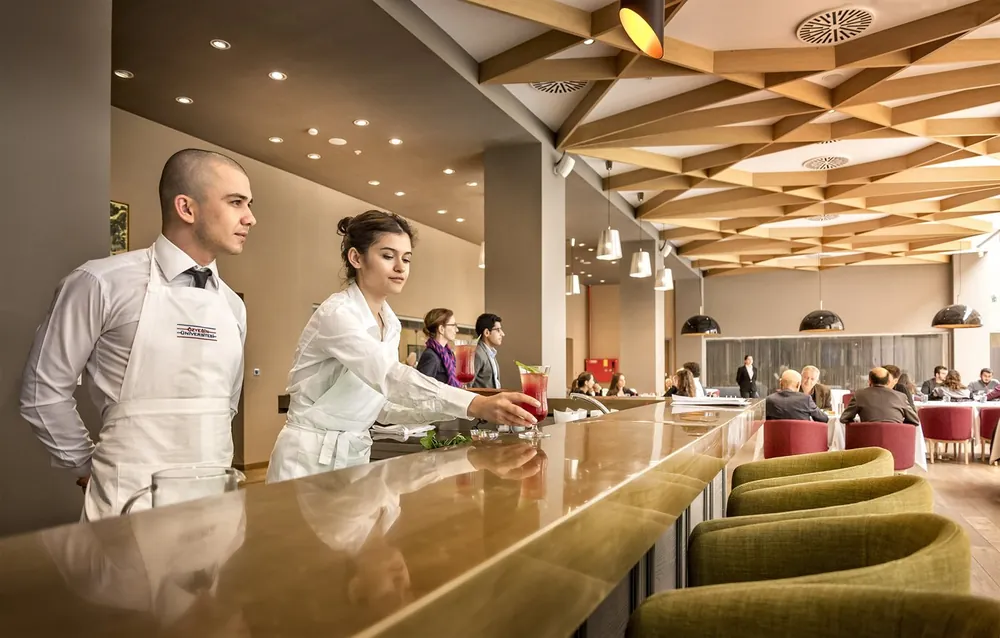
Food is taught at Özyeğin as a system rather than a product. The Gastronomy and Culinary Arts programme, run with Le Cordon Bleu, brings sustainable food systems into the degree itself, and the University marks World Food Day each year with a student seminar on the right to food held with the Food and Agriculture Organization of the United Nations.
Students also meet the social side of food. The Food, Migration and Social Cohesion workshop, hosted on campus, connected research on cooking and community among migrant women with practice. In the SEC 180 Sustainable Campus Practices course, research action teams of students, academics, staff and suppliers take on real campus problems, food waste among them. The Ecological Living and Food Club adds permaculture training, zero-waste workshops and visits to small producers during planting and harvest.
Sustainable food systems content is delivered within the degree programmes rather than as extracurricular provision. Le Cordon Bleu marked 130 years with a gastronomy trends programme on campus, 30 June 2025.
Source: Özyeğin University SDG Report 2025, SDG 2 chapter, page 17 (PDF).
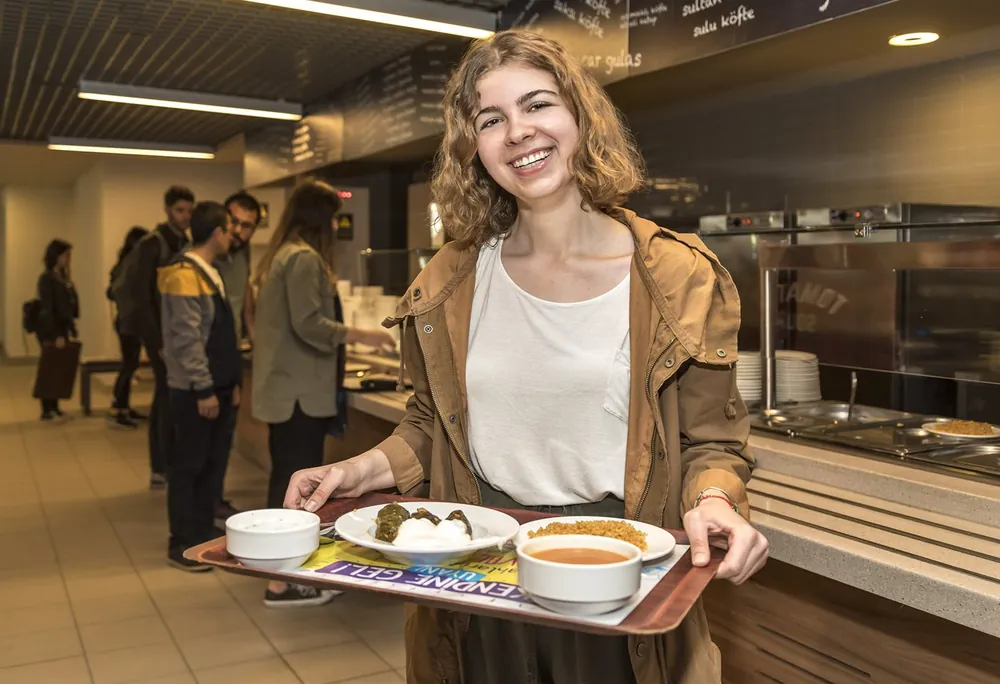
On campus, the University's food work starts with growing and ends with waste. Students of architecture and gastronomy established the Campus Garden, a natural food-growing area used as a living laboratory. Waste on campus, including food waste, is managed within the Zero Waste system for which the University was first certified on 14 February 2020 and re-certified on 11 June 2025 after inspection of both the Çekmeköy campus and the student residences.
The Food Waste Has Lost Its Taste panel in November 2024 opened an exchange between public bodies and the University on circular food systems, and the conversation continued into the reporting period through the Sustainable Gastronomy events run with Le Cordon Bleu. Purchasing is governed by a Sustainable Procurement Policy aligned with ISO 20400.
The awareness component, delivered as a panel on 20 November 2024 and continued into the reporting period.
The campus garden, run by the Department of Architecture and the Gastronomy and Culinary Arts Department, is part of the Le Cordon Bleu curriculum and practises organic growing and permaculture. It works with local producers such as the Şile Earth Market.
Source: Özyeğin University SDG Report 2025, SDG 2 chapter, page 18 (PDF).
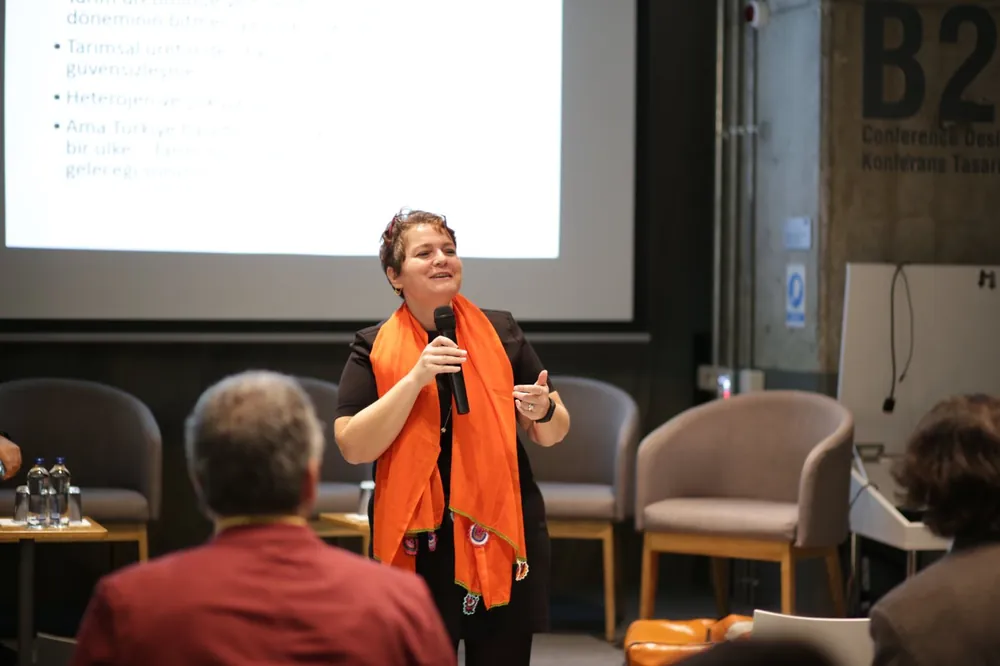
The University's strongest partnership on this goal is with the Food and Agriculture Organization of the United Nations. On 17 October 2025, as part of FAO's 80th-anniversary "365 Days of Action" campaign, Özyeğin hosted the first session of the FAO Talks panel series with FAO and Migros. The panel, organised by the Sustainability Platform's community programme, discussed agricultural and cultural heritage, climate change, food security, digital transformation and the empowerment of women producers.
Three FAO projects run alongside. For the GIAHS candidacy, led by Assoc. Prof. Faik Gür with Özyeğin as service provider, the team prepared Türkiye's first application to register the villages of Büyüksöğle, Küçüksöğle and Geçmen in Antalya's Elmalı district as a Globally Important Agricultural Heritage System. The Green Transition in the Olive Oil Sector project works with the Ministry of Trade, and Responsible Agricultural Investment Areas analyses agri-food investment on the Adana–Şanlıurfa axis. The intergenerational seminar series The Legacy and Future of Turkish Agriculture brings young researchers together with leading figures in the field.
The Agricultural Heritage Systems Workshop and the intergenerational seminar series The Legacy and Future of Turkish Agriculture.
As part of the Söğle Highlands project with FAO Türkiye and the Ministry of Agriculture and Forestry, a training and conservation action plan workshop brought together public institutions, academics, local NGOs, farmers and shepherds.
Source: Özyeğin University SDG Report 2025, SDG 2 chapter, pages 19–20 (PDF).
European and National Projects
Food research at Özyeğin spans the laboratory, the supply chain and the countryside. An interdisciplinary team combining laser technology, photonics, artificial intelligence, plant science and food research works under two TÜBİTAK projects, one on pulsed fibre-laser weed control in greenhouses and one on AI analysis of laser effects on seed germination. Another TÜBİTAK 1001 project builds analytical models for zero-waste food supply chains.
The social science of food is equally developed. The LOAF laboratory, founded in 2021, works on agroecology, fair access to healthy food and local government capacity. Funded projects study new peasants and rural gentrification, endangered local grape varieties in the Aegean and the South-East, and the resilience of alternative food initiatives. In 2025 the University joined two EU-funded projects: Fix-APro, an MSCA Staff Exchanges project coordinated by METU on alternative proteins, and AGRINEXT, a 21-partner Horizon Europe project in which Özyeğin leads the work on lifelong learning systems.
resilience of agricultural supply chains · resilience of alternative food initiatives · endangered local grape varieties in the Aegean and the Southeast, with Urla and Midyat case studies · new peasants, agrarian transformation and rural gentrification in Türkiye · KIRKEP, on the integration of rural and urban economies · food, home cooking and social cohesion among Syrian women.
Fix-APro, an MSCA Staff Exchanges project from the 2025 call coordinated by METU, on integrating alternative proteins into food systems, with industry partners including BİTKİDEN, Tat Gıda and Yayla Agro. AGRINEXT, a 54-month project with 21 partners in 12 countries on skills for competitive and sustainable agriculture, in which Özyeğin leads the work package mapping lifelong learning systems.
Pacha, a collagen-based food venture founded by Dr Aslı Zuluğ with support from Girişim Fabrikası.
Resilience of the agricultural supply chain, on early warning and parametric insurance against climate risk, and The story of alternative food initiatives in the face of multiple crises, carried out with the Yerküre Local Studies Co-operative and the Fair Food Community.
Scopus-indexed outputs mapped to this goal in SciVal.
Since the reporting period · 2026
The Zero-Waste Turkish Cuisine Protocol, agreed on 27 April 2026 to reduce food waste and build sustainable gastronomy into teaching. It falls after the reporting period.
Climate-resilient agriculture with Yenişehir Municipality under the EU–Türkiye Climate Change Grant Programme. The University's own announcement dates the project to 2026–2028, so it falls after the reporting period.