
Quick Access
Applications
Quick Links
Goal 16. Peace, Justice and Strong Institutions
Peace and justice depend on strong, transparent institutions. Özyeğin University governs itself through written ethics, zero tolerance of corruption and participatory bodies, coordinates a Horizon Europe project on information manipulation, and gives the public access to legal support.
Source: Özyeğin University SDG Report 2025, SDG 16 chapter, page 87 (PDF).
Source: Özyeğin University SDG Report 2025, SDG 16 chapter, page 88 (PDF).
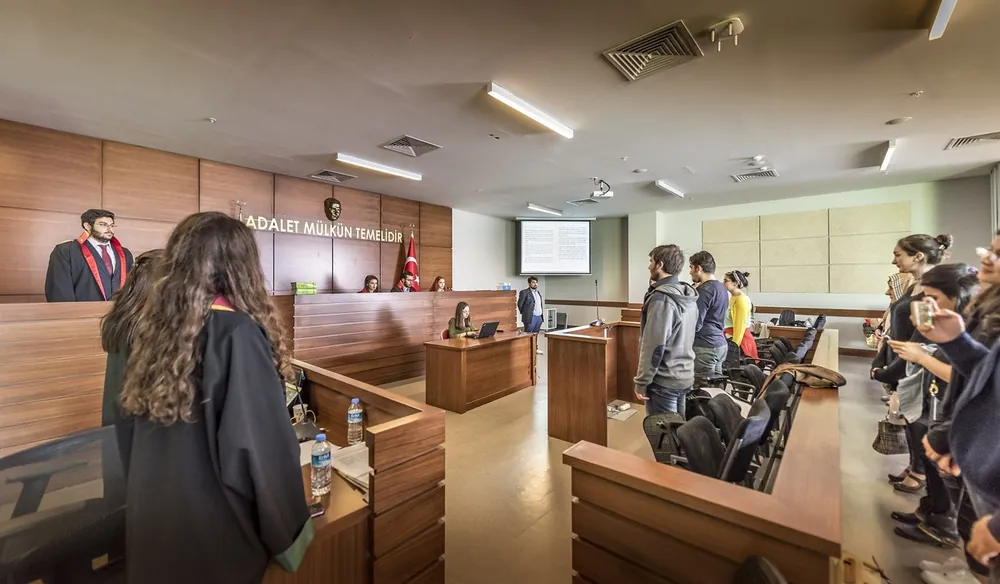
Law and justice are taught through practice. The Law Faculty's moot court programme works through cases on domestic violence, custody and union compensation. An experiential learning model built into a course on the judicial process uses court visits, hearing observations, reflective journals and simulations. Theme-day talks, such as access to justice on the Day of the Girl, bring rights-based questions into campus life, and Information Technology runs a seminar on cyberbullying.
The OzU Open debating tournament, open to participants from across Türkiye, and the Non-Violent Society Summit build the skills of public reasoning.
BRIDGE, an Erasmus+ Jean Monnet Centre of Excellence announced in December 2025, adding new courses and a Democracy Laboratory to the curriculum.
Source: Özyeğin University SDG Report 2025, SDG 16 chapter, page 89 (PDF).
Özyeğin governs itself through written ethics and participatory bodies. The Ethical Principles and Values, adopted by the Senate, bind all members and stakeholders and name Justice and Integrity as a core priority, with merit, impartiality and accountability as the cornerstones of decision-making. Concerns go to a designated Ethics Compliance Officer, are reviewed in strict confidence and answered within 24 hours, with the reporting party's identity protected. The framework treats a climate where all ideas can be expressed without fear, and where academic freedom is protected, as indispensable. The Unit for the Prevention of Discrimination and Violence works under the EDIB Policy, and the Community Engagement Policy defines the University's approach to its relationship with society.
Participation is structured. The Quality Commission of all deans and directors manages the quality cycle and the evidence base of the Institutional Internal Evaluation Report, published every year since 2016. The HSE Committee, the first at a Turkish university, governs the management systems and reports to the Rectorate. The Social Impact Committee sets annual priorities, indicators and the reporting framework, with theme leaders (OLTE for education, the Entrepreneurship Office for innovation, QHSE for environment) connecting units; 17 ESG indicators are tracked institution-wide, with a target of 30 by 2029. The Disabled Students Unit Commission and the Dormitory Life Committee govern accessibility and residential life, and the Planning and Analysis Office, reporting directly to the Rector, runs strategic plan metric analysis, satisfaction survey reporting and the institutional data infrastructure.
ISO 9001:2015 certification, obtained in 2025.
The University has zero tolerance for bribery and corruption, set out in the Bribery and Corruption Policy of the Human Resources Policy. Gifts that could create a conflict of interest may not be accepted, family and close relationships in the same reporting line must be reported, and purchasing follows the Purchasing and Supplier Management Procedure, with the estimated cost of each tender kept confidential and tender and acceptance commissions overseeing the process. Staff and students can report concerns to dedicated ethics addresses, anonymously if they wish, and receive an initial response within 24 hours. In August 2025 the President reaffirmed the University's commitment to the UN Global Compact, including Principle 10 against corruption.
Source: Özyeğin University SDG Report 2025, SDG 16 chapter, page 90 (PDF).
The University works with public institutions to strengthen them. Under a Ministry of Justice and Council of Europe project, the Law Faculty trains serving members of the Civil Monitoring Boards of Penal Institutions. The ÖzÜ Pro Bono Legal Clinic, under a protocol with the Istanbul Bar Association, gives the public access to legal support through students and volunteer lawyers.
The University also offers neutral ground for debate. The OzU AI Platform brings business and academia together on the ethics and regulation of AI, a UN Global Compact event addressed business and human rights and institutional integrity, and the Law Faculty's seminars and symposia, several run with bar associations, are open to the public and to professional bodies. Advice to government is a steady output: KIRKEP for the Ministry of Industry and Technology, district investment plans for the GAP Administration, and advice on an earthquake resilience planning guide for local governments.
Dr Başak Ozan Özparlak spoke on the criminal use of artificial intelligence on Habertürk TV, 8 January 2025.
Source: Özyeğin University SDG Report 2025, SDG 16 chapter, page 91 (PDF).
European and National Projects
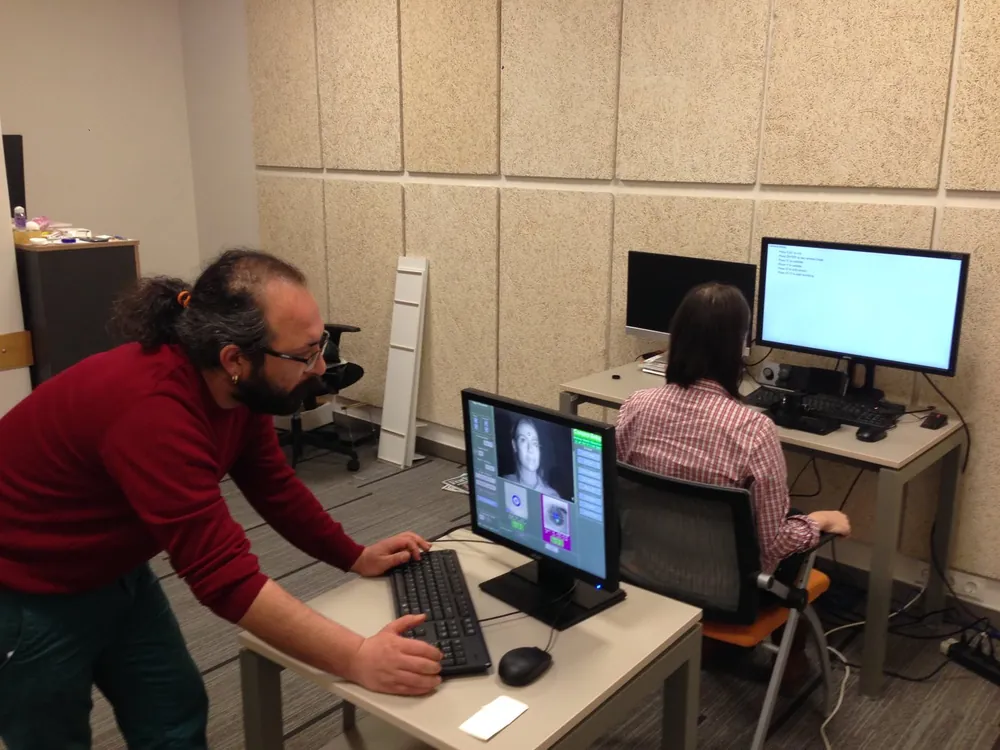
DE-CONSPIRATOR is the flagship. Coordinated by Assoc. Prof. H. Akın Ünver of the Department of International Relations, it is funded by Horizon Europe Cluster 2 and is only the second multi-partner project in that cluster coordinated by a Turkish institution. With twelve partners, including the Istituto Affari Internazionali, Heidelberg, Groningen, Amsterdam and CIDOB, it measures the effects of foreign information manipulation in 25 EU member states and three partner countries and is building a multilingual database of incidents.
SOS4Democracy, led by the University of Ljubljana, strengthens research capacity on illiberal democracies, and OppAttune studies oppositional extremism. The Law Faculty runs laboratories on the law of the future (IUS FUTURUM), violence and law, children's rights and AI law, faculty take part in COST Action CA23149 on human rights, and a Jean Monnet Chair on migration and mobility adds a European policy dimension.
Scopus-indexed outputs mapped to this goal in SciVal.