
Quick Access
Applications
Quick Links
Goal 15. Life on Land
Biodiversity loss and land degradation are urgent global issues. Özyeğin University manages its campus landscape for water efficiency and biodiversity, uses it as a living laboratory for climate research, plants with its students, and supports agricultural heritage landscapes with the Food and Agriculture Organization.
Source: Özyeğin University SDG Report 2025, SDG 15 chapter, page 82 (PDF).
Source: Özyeğin University SDG Report 2025, SDG 15 chapter, page 83 (PDF).
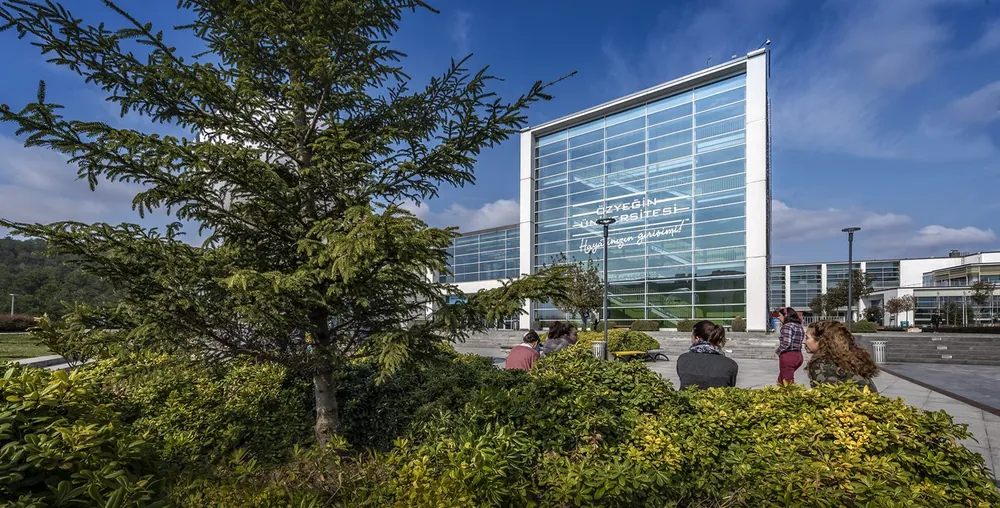
Learning about land happens outdoors. The biodiversity nature excursion on 1–5 October 2025 gave participants hands-on learning about ecosystem protection and wildlife. The Ecological Living and Food Club runs permaculture training, a trip to Permaturk and regular visits to small producers during planting and harvest. Environment and ecosystem themes run through courses and studios, and the Agricultural Heritage Systems Workshop teaches traditional land use.
Since 2014 the HSE Committee and the Dean of Students' Office have organised a tree planting event at the start of every academic year, and more than 18,000 trees have been planted over the past decade to enhance biodiversity.
Duyarlı ÖzÜ volunteers, the QHSE Office and Technical Services planted 15 saplings in pairs after training by forest engineer Ercan Akbıyık.
Source: Özyeğin University SDG Report 2025, SDG 15 chapter, page 84 (PDF).
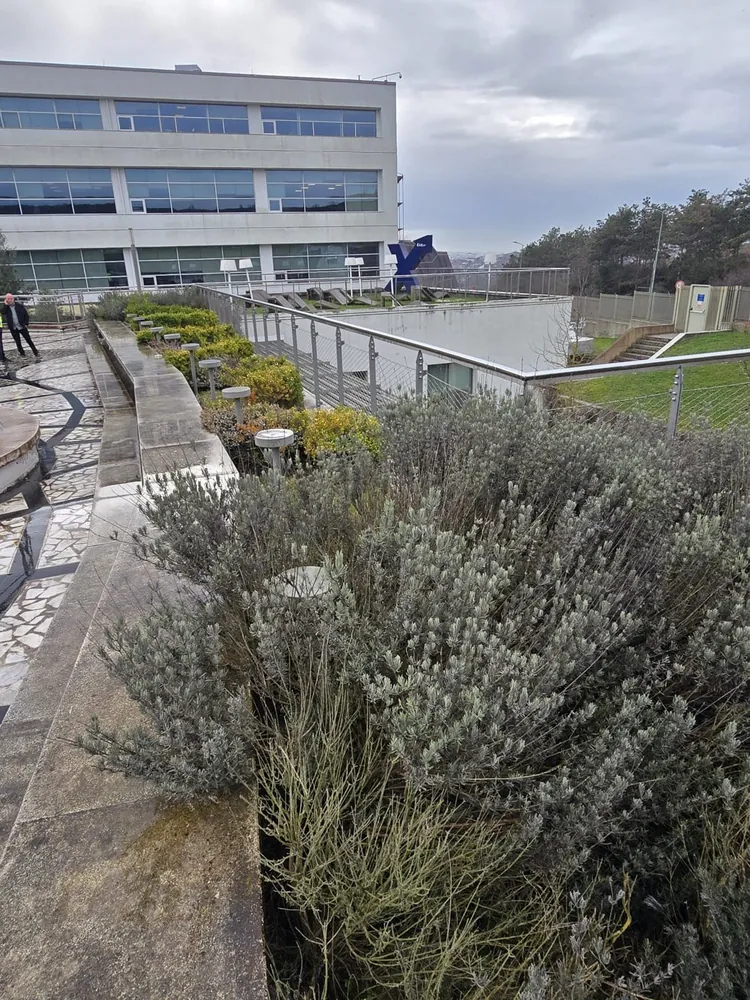
On campus, biodiversity is managed through landscape and procedure. Drought-resistant landscaping, based on a planting inventory and low-water species, and smart irrigation reduce pressure on water and soil. Since 5 November 2025 the care, feeding, health and living conditions of the campus's free-roaming cats have been governed by a formal procedure. Students built the Campus Garden as a natural food-growing area, and the campus tree inventory supports sensor research.
Xeriscape landscaping, based on a campus planting inventory and the use of low-water species.
The Campus Cat Coexistence Procedure, in force from 5 November 2025, under which the care, feeding, health and living conditions of the campus's free-roaming cats are governed by formal procedure.
Campus landscaping is irrigated with drip and sprinkler systems and smart irrigation, and ÖzÜ Bostan, the campus vegetable garden, is managed organically with crop rotation, composting and natural pest control, without synthetic pesticides or fertilisers.
In UI GreenMetric 2025 the University ranked 89th of 1,745 universities worldwide, with green space among its strongest areas.
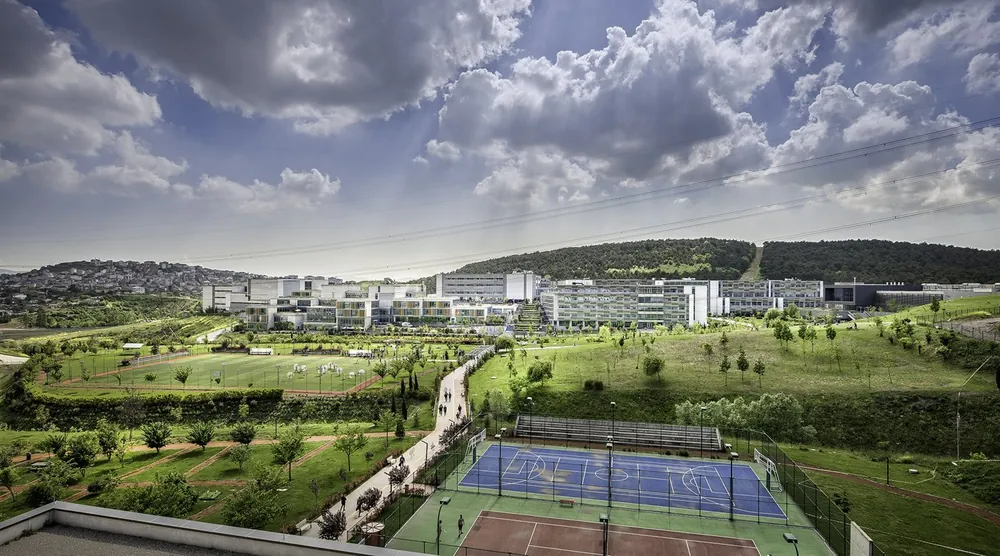
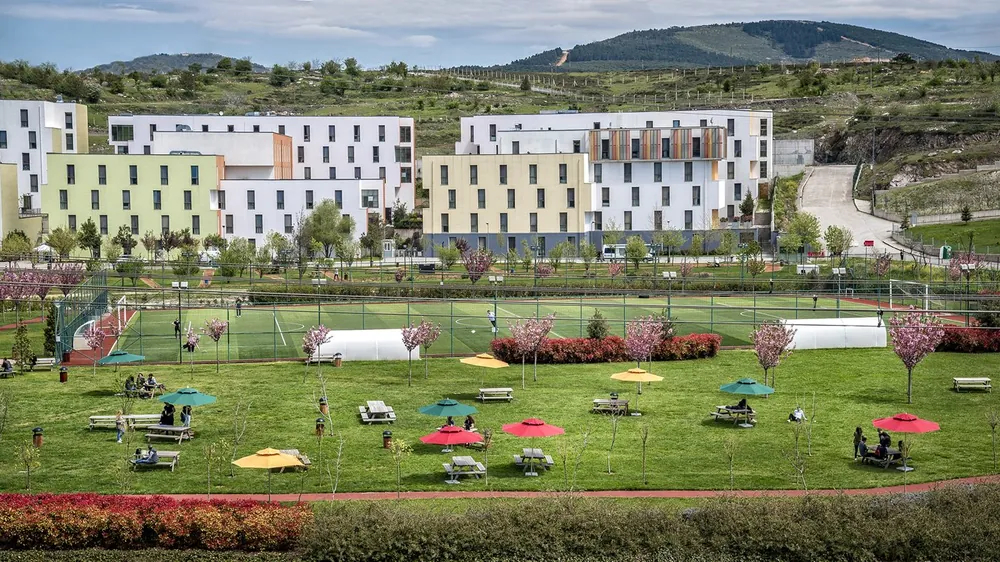
Local and adapted species are planted across more than half of the campus landscape, which preserves the Nişantepe forest ecosystem and reduces the need for fertilisers and irrigation. The Campus Stream Project keeps the stream as a corridor for local fauna and a living classroom where students follow freshwater health.
Source: Özyeğin University SDG Report 2025, SDG 15 chapter, page 85 (PDF).
The University's land work reaches far beyond Istanbul. With FAO and the Ministry of Agriculture and Forestry, a team led by Assoc. Prof. Faik Gür prepared Türkiye's first application to register the agro-silvo-pastoral system of Büyüksöğle, Küçüksöğle and Geçmen villages in Antalya's Elmalı district as a Globally Important Agricultural Heritage System, preserving traditional knowledge, landscapes and cultural values.
Closer to home, paper destroyed for data security is directed to reforestation through the TEMA Foundation, and the University supports environmental camps run by the Simurg youth association. A public conference on street animals discussed the legal side of animal rights violations.
Collaboration with the TEMA Foundation, including secure paper disposal.
The FAO GIAHS candidacy for the Söğle Highlands, seeking recognition of the highland agricultural system as a Globally Important Agricultural Heritage System.
Agricultural heritage training in Antalya, 2 June 2025, with FAO Türkiye and the Ministry of Agriculture and Forestry, preparing a conservation action plan for the Söğle Highlands landscape with farmers, shepherds, NGOs and public bodies.
Source: Özyeğin University SDG Report 2025, SDG 15 chapter, page 86 (PDF).
European and National Projects
Land research is concentrated in agriculture and rural change. TÜBİTAK projects study new peasants and rural gentrification in Türkiye, endangered local grape varieties in Urla and Midyat, and laser-based, non-chemical weed control for greenhouses. The campus microclimate study, running from May 2025 with sensors on campus trees, uses the University's own landscape as a living laboratory.
Campus Tree Sensor Research, run as a living laboratory on the campus itself: a six-month urban heat island microclimate measurement from 8 May 2025 and a thermal comfort survey across five open spaces on 20 June 2025.
Endangered local grape varieties in the Aegean and the Southeast, with Urla and Midyat case studies.
Smart pulsed-fibre-laser weed control for greenhouses, TÜBİTAK 1001, Dr Parviz Elahi — a non-chemical approach to weed management.
Scopus-indexed outputs mapped to this goal in SciVal.