
Quick Access
Applications
Quick Links
Goal 12. Responsible Consumption and Production
Production and consumption patterns remain unsustainable worldwide. Özyeğin University was the first Turkish university to hold the Zero Waste Certificate, renewed it in 2025, separates waste at source across its campus, and carries circular economy practice to suppliers, businesses and the food sector.
Source: Özyeğin University SDG Report 2025, SDG 12 chapter, page 67 (PDF).
Source: Özyeğin University SDG Report 2025, SDG 12 chapter, page 68 (PDF).
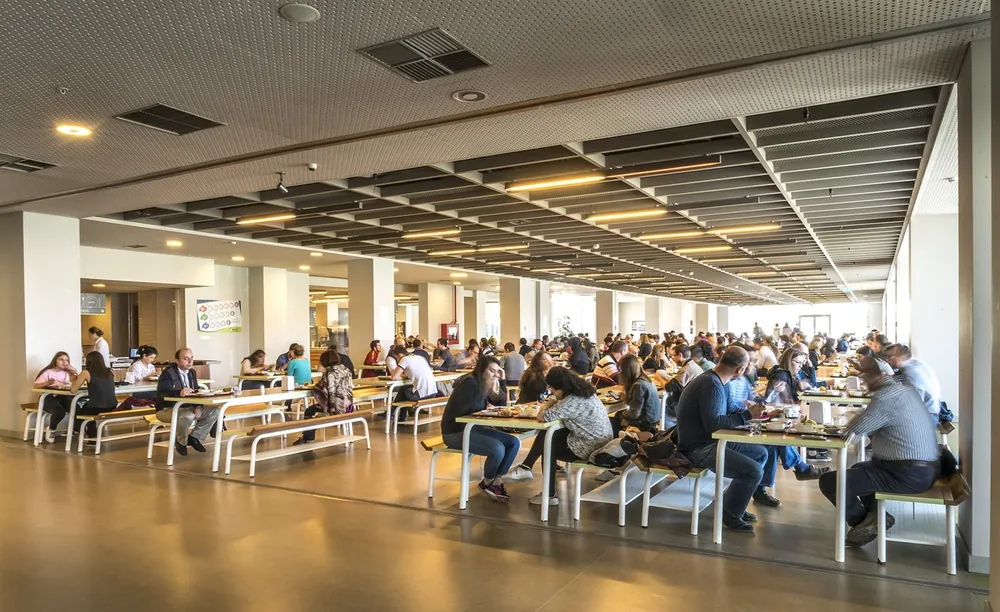
Responsible consumption is learned through campus practice. We Melt What We Consume, held on 19 March 2025 for Global Recycling Day, informed students about the University's waste management and recycling, and was the first event at Özyeğin delivered carbon-neutral. It ran as part of SEC 101 and the OzU Cares volunteering programme with the HSE student community.
Circular design is taught by making: OpenFab reuses filament waste from its own 3D printing service. The SEC 180 Sustainable Campus Practices course puts students, staff and suppliers into research action teams on campus problems. Supplier and subcontractor staff received training in water, energy and waste management in 2025.
Tükettiklerimizi Eritiyoruz, held on 19 March 2025.
Supplier sustainability training, delivered to the University's own suppliers across 2024–2025.
The carbon-neutral Being an Engineer course, the first course at the University delivered on that basis.
The Circular Design talk, and Future Greens, encouraging sustainable business models.
We're Disposing of What We Consume! Since its first edition the campaign has reached around 600 students through workshops, campus clean-ups and sessions on the University's waste management, with students collecting waste alongside cleaning staff. Mandatory environmental awareness modules on the learning management system, digital screens and QR-coded messages reinforce the same habits.
Source: Özyeğin University SDG Report 2025, SDG 12 chapter, page 69 (PDF).
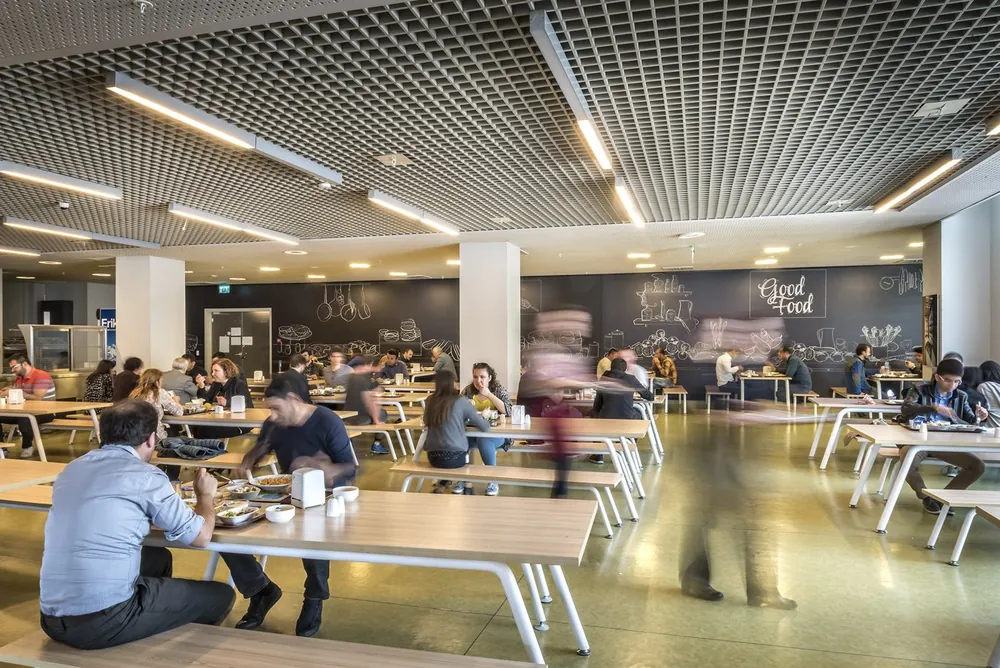
Özyeğin was among the first higher education institutions to receive the national Zero Waste Certificate, on 14 February 2020. Following inspections, it was re-awarded the certificate on 11 June 2025 for waste management across the Çekmeköy campus and the student residences, covering efficient resource use, separation at source and recycling.
Operational changes followed in 2025. Individual office bins were removed in favour of dual collection in shared areas, with a target of reducing total waste by 12 per cent over four years, and forty single bins were converted without buying new equipment. ISO 14001 has governed environmental management since 2014, and the Sustainable Procurement Policy, aligned with ISO 20400, builds sustainability criteria into purchasing.
The Zero Waste Certificate, under the Ministry of Environment, Urbanisation and Climate Change programme. Özyeğin was the first Turkish university to obtain it, in February 2020; it was renewed in June 2025.
Forty single bins were converted to the dual system without purchasing new equipment.
The Sustainable Procurement Policy, aligned to ISO 20400, integrating environmental and sustainability criteria into procurement and extending the University's standards to its suppliers.
ISO 14001 Environmental Management System, certified since March 2014; the University is recorded in its UN Global Compact Communication on Progress as the first Turkish university accredited to it.
Paper use per person, including posters, brochures and other printed material, fell from 4.89 kg in 2024 to 2.91 kg in 2025, against a target of 4.08 kg. The University used 17.5 tonnes of paper in 2025, 8 tonnes of it copier paper.
66,854 kg of paper, plastic, metal and glass packaging waste was separated at source and sent for recycling. In total the University generated 1,480 tonnes of waste in 2025, of which 1,468 tonnes (99 per cent) went to recycling or recovery. The 2025 figures use a new, more complete method. Average container weights for the campus and the residences were measured by sampling, and Administrative Affairs counts full containers every day. Earlier years relied on a year-end estimate from Çekmeköy Municipality, so most of the rise from 202 tonnes is due to the change in method rather than to more waste.
Most drinking water points on campus are mains-fed dispensers and kitchen purifiers with filtration, which replace bottled water coolers. Bottled dispensers remain at security posts, some offices and for events. Plastic and paper cups are no longer supplied in campus kitchens, staff receive glass bottles, and reusable materials are promoted at events.
Single-use plastic and cardboard cups were removed from campus kitchens, and individual bins in offices and classrooms were replaced by dual-stream stations in shared areas. Outdoor bins are being converted to dual compartments. The 2029 target is a 12.61 per cent cut in waste per person, to 215.58 kg a year. Selected waste streams, such as plastic caps, go to OpenFab for student prototyping.
Source: Özyeğin University SDG Report 2025, SDG 12 chapter, page 70 (PDF).
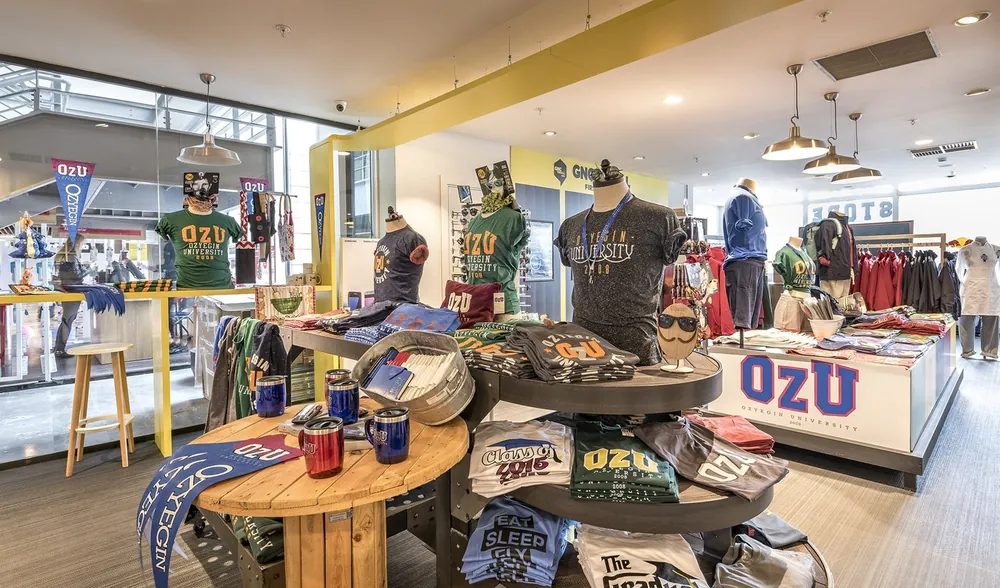
Özyeğin carries responsible production into business. SustainHUB Academy, run with SKD Türkiye, covers ESG, the circular economy and climate law in a six-module programme; its second cohort began on 11 September 2025. The Food Waste Has Lost Its Taste panel and sustainable gastronomy events with Le Cordon Bleu share practice with the food sector.
Public conferences keep the subject in view: the SÜR Sustainability Conference with TÜSİAD and Global Compact Türkiye.
SustainHUB Academy, delivered with SKD Türkiye, 11 September 2025, in its second cohort — a green transformation programme open beyond the University.
Food Waste Has Lost Its Taste panel.
Source: Özyeğin University SDG Report 2025, SDG 12 chapter, page 71 (PDF).
European and National Projects
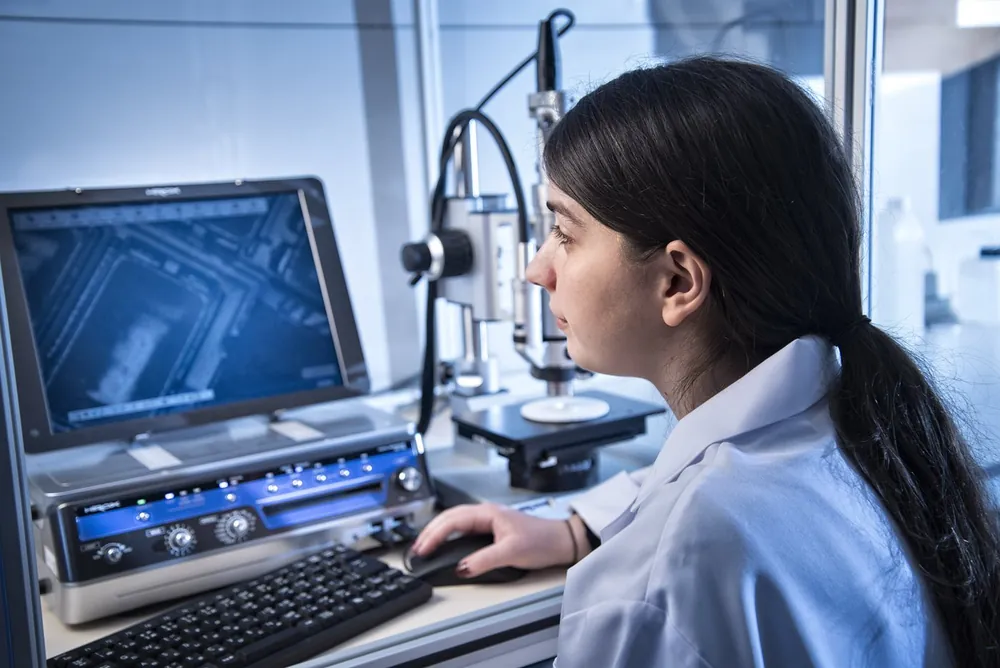
Research on this goal links materials, supply chains and heritage. ReBuild-3D, coordinated by Özyeğin with EU funding, develops circular, low-carbon construction materials. A TÜBİTAK 1001 project builds analytical models for zero-waste food supply chains, and Fix-APro, funded in 2025, studies how alternative proteins can enter food systems. The Additive Manufacturing Alloys Research Centre addresses material efficiency in advanced manufacturing.
Reporting is part of the University's accountability. Özyeğin was the first university in Türkiye to publish a carbon footprint report, in 2020, and the first to publish a water footprint report, in 2023. It publishes a Sustainability Report, this SDG Report and GreenMetric returns, and reports to the UN Global Compact, which it signed in 2018.
Towards Zero Waste: analytical models for sustainable food supply chains, TÜBİTAK 1001.
The University publishes a Sustainability Report, this SDG Report and GreenMetric returns, and has placed first among Turkish foundation universities in GreenMetric five times.
Scopus-indexed outputs mapped to this goal in SciVal.
Since the reporting period · 2026
Sustainable Procurement and Responsible Supply Policy, published 18 February 2026 and prepared in line with ISO 20400, covering life-cycle thinking, ethical sourcing, Scope 3 emissions and supplier development.