
Quick Access
Applications
Quick Links
Goal 11. Sustainable Cities and Communities
Cities must become safer, more resilient and more inclusive. Özyeğin University runs a car-free, pedestrian-priority campus, organises disaster preparedness with national authorities, works with its neighbouring districts, and researches earthquake risk, urban transformation and urban heritage in Istanbul.
Source: Özyeğin University SDG Report 2025, SDG 11 chapter, page 62 (PDF).
Source: Özyeğin University SDG Report 2025, SDG 11 chapter, page 63 (PDF).
Students learn about the city by preparing for its risks. The Earthquake Simulation Truck came to campus on 27–29 May 2025, and QHSE training covers safe living, environment and disaster awareness, with drills. The Watch Your Step workshop on 14 November 2025 turned waste into a permanent footprint installation on campus.
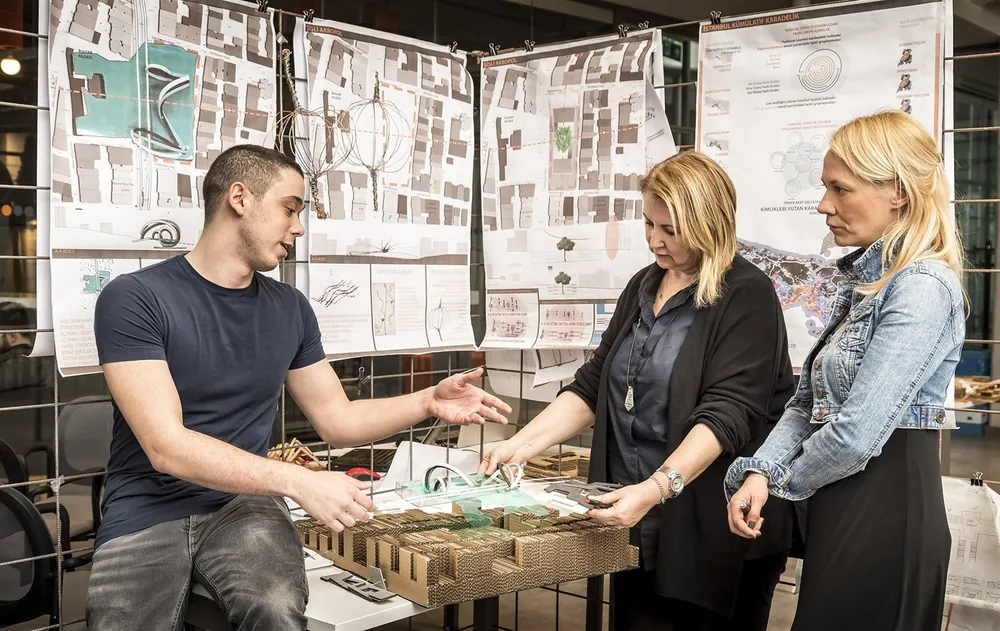
Design students work directly on the city. The Urban Facade Istanbul Waterfront workshop, run with the University of Parma and four other Italian universities, focused on the Galata and Beyoğlu shoreline. The Urban Dialogue: Nişantepe board, made by architecture and law students with the Association for Spatial Justice, set out the urban issues of the neighbourhood next to the campus. Placeless Courses take students into the historic city itself.
The Earthquake Simulation Truck, 27–29 May 2025, giving students direct experience of seismic response.
Source: Özyeğin University SDG Report 2025, SDG 11 chapter, page 64 (PDF).
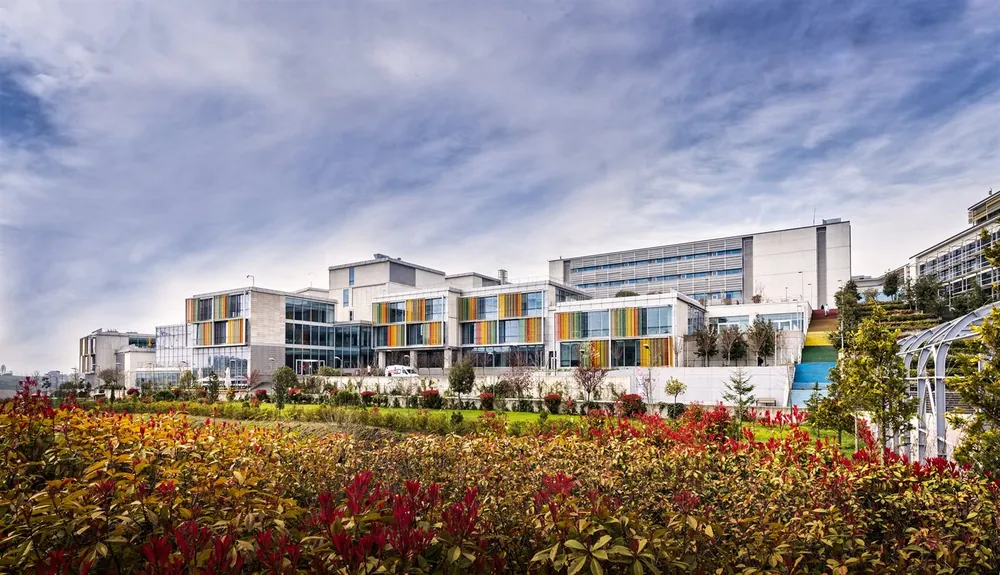
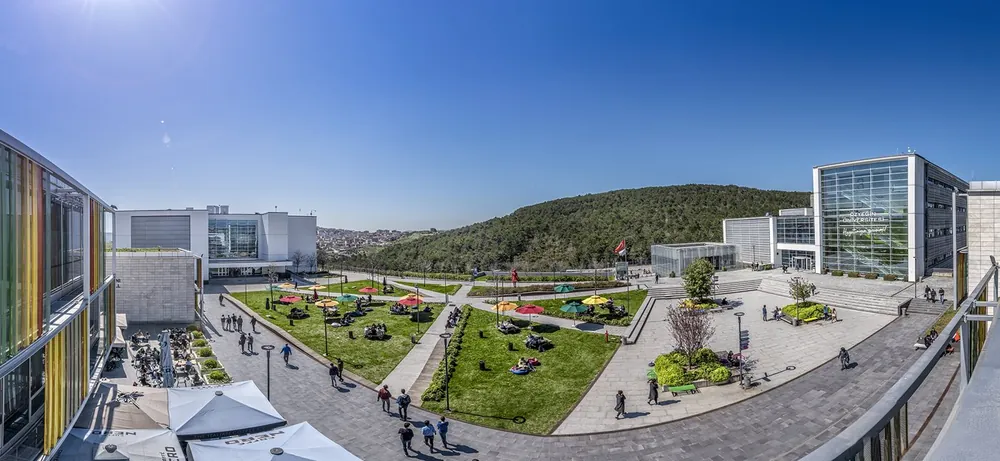
The Çekmeköy campus is car-free and pedestrian-priority. Pedestrian layout, sustainable transport and accessibility are treated as one design approach, and the QHSE impact report highlights it as a principal theme. Three buildings, AB1, AB2 and the Student Centre, hold LEED Gold certification at building level. Smart irrigation, drought-resistant planting and a formal procedure for the care of the campus's cats since November 2025 extend sustainability to the landscape.
Disaster preparedness has institutional form. The AFAD and YÖK Disaster Risk Management Coordination Unit, governed by an Institutional Disaster Management Policy, coordinates with the national disaster authority and the Council of Higher Education. Business continuity is certified under ISO 22301.
Xeriscape landscaping and the Campus Cat Coexistence Procedure, under which the care, feeding, health and living conditions of the campus's free-roaming cats are now managed by formal procedure.
Internal vehicle traffic is not permitted for daily use. The University promotes public transport, carpooling, electric vehicle charging and walking and cycling, and is bringing commuting emissions into its carbon accounting.
Source: Özyeğin University SDG Report 2025, SDG 11 chapter, page 65 (PDF).
Özyeğin works with its neighbours and with local government. Yaklaş 2030 brings the University together with residents of Nişantepe and Çekmeköy on shared projects, and OpenFab held a production workshop with thirty children from Nişantepe. With ÇEKÜT, the University sustains search and rescue capacity as an institutional commitment.
Cultural heritage and the arts are part of this goal. With the US Ambassadors Fund for Cultural Preservation, the University contributes to the restoration of the Panagia Paramythia church in Fener. The Istanbul Game Entrepreneurship Academy works with Çekmeköy Municipality, and the Boğaziçi Bluefish Ambassador training connects food professionals with the heritage of the Bosphorus.
Disaster preparedness with ÇEKÜT, sustaining search and rescue capacity as an institutional commitment.
Yaklaş Nişantepe, the local development programme in the neighbouring district.
Social Sustainability Summer Camp, 21–24 July 2025, bringing together social sustainability, equality, inclusion, institutional culture, well-being and social transformation.
Distinguished Leaders at OzU, the local development and business sessions of the series.
Source: Özyeğin University SDG Report 2025, SDG 11 chapter, page 66 (PDF).
European and National Projects
Urban research at Özyeğin concentrates on disaster risk. In 2025 the Social Impact Seed Fund supported a study with Istanbul Metropolitan Municipality's Earthquake Risk Management Department and the Istanbul Planning Agency on how risk perception shapes urban transformation decisions. A TÜBİTAK project estimates road closure probabilities in earthquakes, and the Post-Earthquake Emergency Shelter Model is being developed on campus.
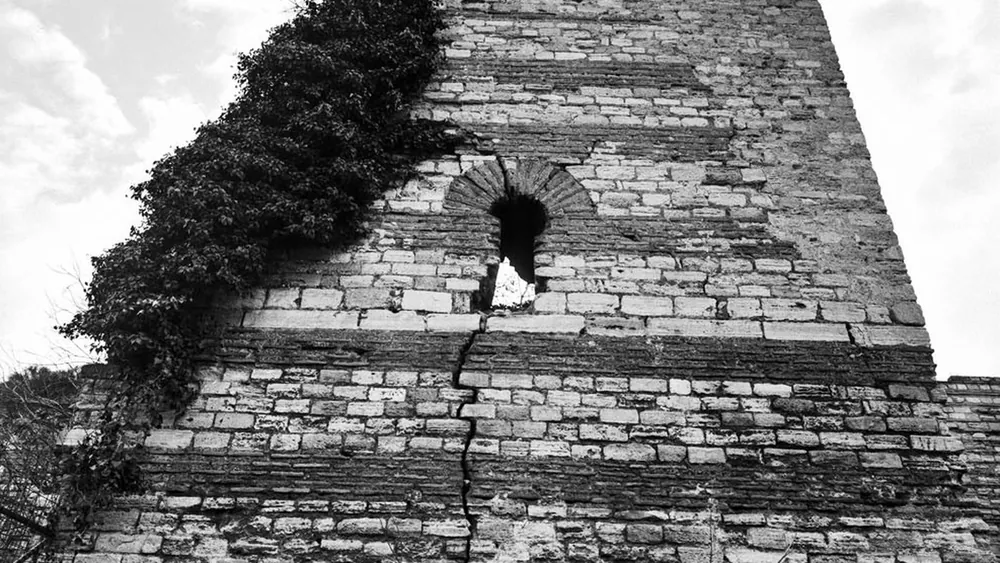
Heritage research is the other strand. A field and photographic study of Istanbul's 20-kilometre city walls was published by ÖzÜ Press, and AQUA Viva, funded in 2025, treats water as living heritage. KIRKEP and the GAP district investment plans bring the same analysis to rural and regional settlements.
Estimating road closure probability in earthquakes and analysing the recovery process, TÜBİTAK 1001, Assoc. Prof. Bekir Bartın.
Istanbul city walls and urban heritage research, published by ÖzÜ Press as a field and photographic study of the present-day uses of the 20-kilometre walls. The University also contributes to the restoration of the Panagia Paramythia church in Fener, supported by the US Ambassadors Fund for Cultural Preservation.
KIRKEP, on the integration of rural and urban economies, and work with the GAP Administration on district investment plans.
The Istanbul Design Institute, and LOAF, the Agri-Food Studies and Local Development Laboratory.
Scopus-indexed outputs mapped to this goal in SciVal.