
Quick Access
Applications
Quick Links
Goal 1. No Poverty
Poverty limits who reaches higher education and who completes it. Özyeğin University widens access through needs-based scholarships with academic support attached, and works with cooperatives, development agencies and local communities on livelihoods in regions in economic transition, turning field research into training and policy advice.
Source: Özyeğin University SDG Report 2025, SDG 1 chapter, page 10 (PDF).
Source: Özyeğin University SDG Report 2025, SDG 1 chapter, page 11 (PDF).
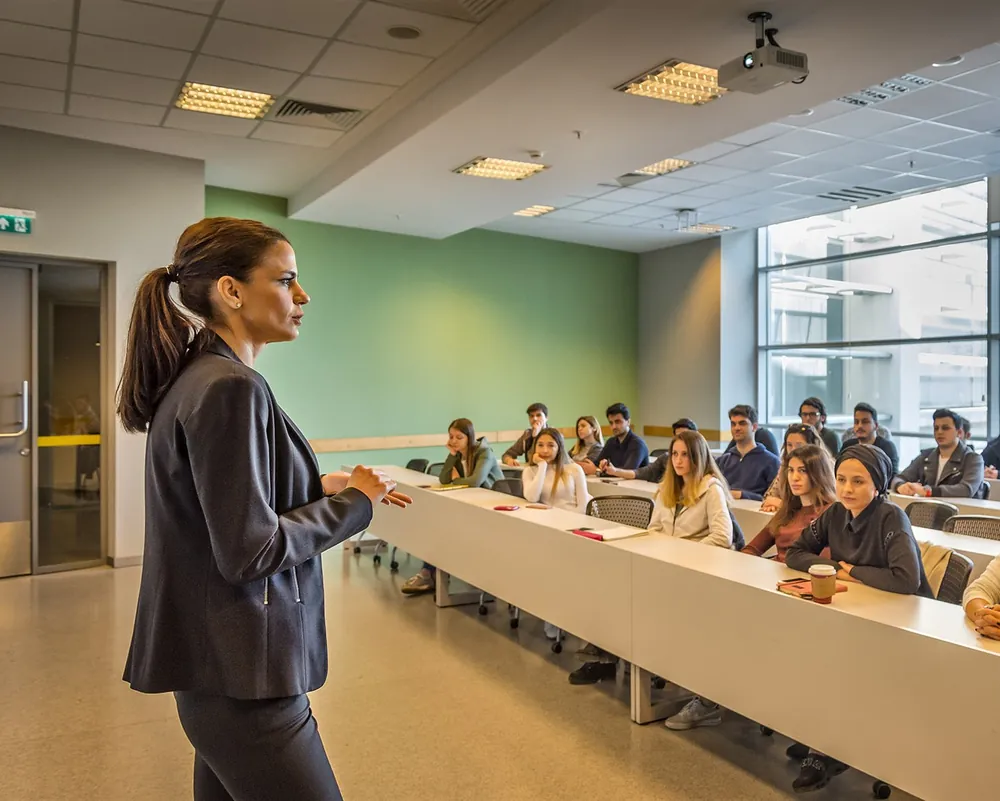
Özyeğin University treats poverty first as a question of who reaches higher education and who completes it, and second as a question students should learn to see for themselves. Every first-year student takes SEC 101 Introduction to University Life, a compulsory course that introduces the Transformative Education Programme, academic integrity, AI literacy and environmental sustainability. Outside the classroom, the Duyarlı ÖzÜ volunteering programme, active since 2011, runs field projects with children, older people and disadvantaged groups, so that students can meet economic hardship at first hand.
Later in the degree, the Responsible Citizenship and Impact courses ask students to design and deliver projects with external partners and to present them publicly at the end of term.
The University's volunteering programme, delivering service-learning modules tied to need identified in the surrounding communities rather than chosen by the University. Across four flagship events in the reporting period the programme recorded one-to-one contact with 227 children and 54 older adults.
Credit-bearing courses in which students design and deliver field projects with external partners. On 14 March 2025 students on the course worked directly with middle-school pupils.
Source: Özyeğin University SDG Report 2025, SDG 1 chapter, page 12 (PDF).
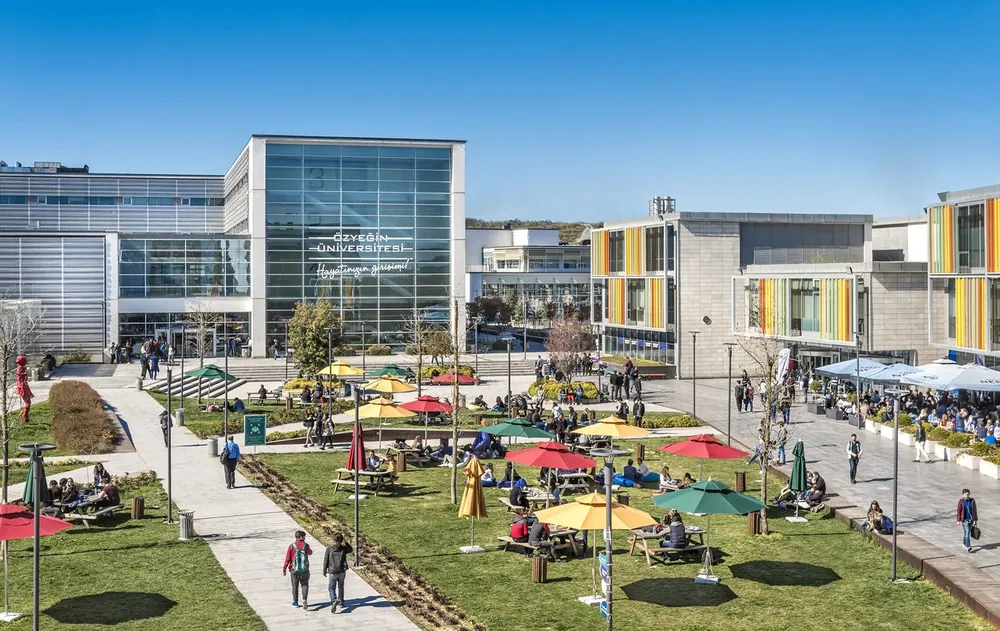
Financial access is the University's most direct instrument against poverty. The Equal Opportunity in Education Scholarship Programme (EFEB) was launched in 2015 for applicants who ranked among the top one per cent in the national university entrance examination but could not take up a full scholarship elsewhere because of their family's financial situation. It is funded by donations, and the number of holders has grown steadily, from 103 in 2021–2022 to 118 in 2023–2024 on the University's own published figures.
What distinguishes EFEB is what surrounds the scholarship. A dedicated EFEB Office follows each holder academically and socially throughout the degree, manages donor relationships and organises cultural activities, including trips run with the Hüsnü Özyeğin Foundation. The Zeynep Alp Köseoğlu Scholarship Programme operates alongside EFEB, and the Social Impact Seed Fund finances early-stage projects with community partners.
The University's principal instrument for widening access, with an explicit focus on first-generation university students. Support is not limited to fee remission: a dedicated EFEB Office provides academic and pastoral follow-up for the duration of the degree.
The Social Impact Seed Fund, one of three internal seed funding lines, supporting early-stage projects delivered with community partners. Nine projects funded in the 2025 round.
1,395 undergraduates and 478 graduate students studied on full scholarships, up from 1,267 and 426 in 2024, and 120 students held scholarships funded by companies and organisations.
Source: Özyeğin University SDG Report 2025, SDG 1 chapter, page 13 (PDF).
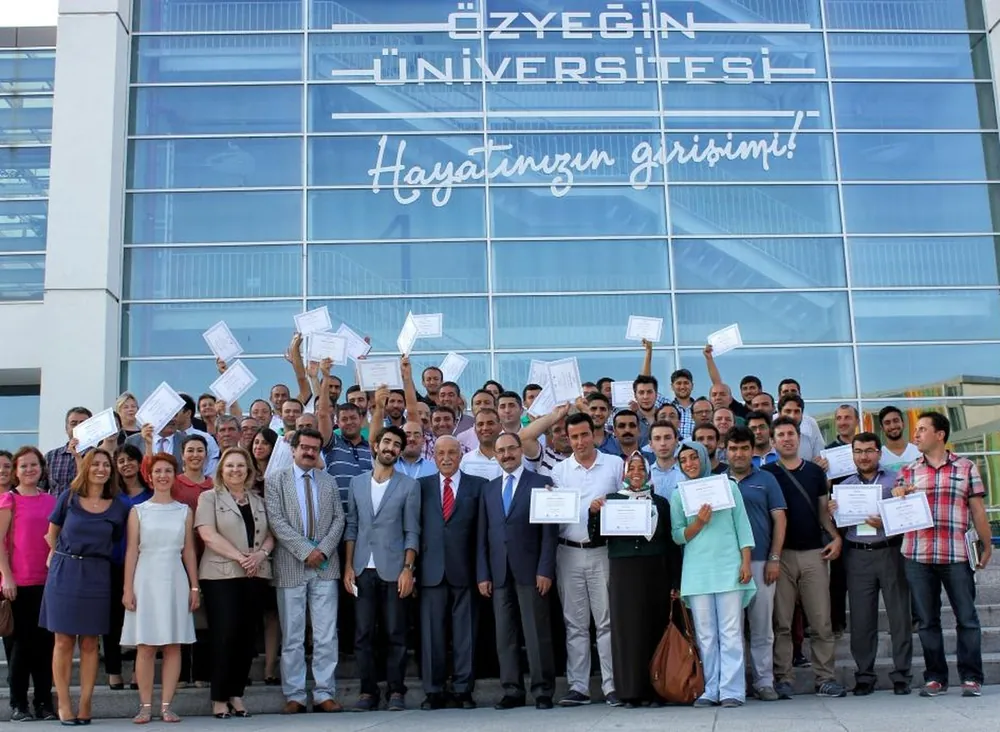
Beyond the campus, the University's anti-poverty work concentrates on livelihoods and on access to basic services. Through the Özyeğin Rural Development Model, the Sustainability Platform's Community Engagement Programme provides capacity-building training and mentoring to cooperatives and associations in Kilis, Bitlis, Rize, Iğdır and Kayseri. The KADİM network matched thirteen women's cooperatives with mentor institutions from the public sector, private sector and civil society, and the Goldman Sachs 10,000 Women programme was delivered in Türkiye for the first time in partnership with the University.
Access to services is the second strand. ÖzÜÇAM has provided free or low-cost couple and family therapy to the public since 2017, and most of its clients come from outside the University. The Pro Bono Legal Clinic, run under a protocol with the Istanbul Bar Association, lets law students follow public-interest cases alongside volunteer lawyers. In the neighbourhoods around the campus, the Yaklaş programme brings University members and residents of Nişantepe and Çekmeköy together on shared projects.
Local development projects in Çekmeköy and Nişantepe, the districts immediately surrounding the campus.
Extending educational provision into rural settings.
Free or low-cost couple and family therapy, open to the public since 2017: more than 10,000 sessions for over 1,000 people, most of them from outside the University.
Duyarlı ÖzÜ field projects, including the 23 April Children's Day festival delivered with SEC 202 students.
The Social Impact Mapping Report records 350 to 400 people in vulnerable circumstances — people with special needs, nursing-home residents, women producers — engaged in sustained transformative work across the year, distinct from one-off event attendance.
The 13th edition was held on campus on 25–29 August 2025 and focused on cooperatives in sustainable local and rural development. In December 2025 a dedicated edition was run in Şanlıurfa for public sector experts at the request of the GAP Regional Development Administration. More than 500 experts have completed the programme since 2014.
Training and mentoring for cooperatives and associations in Kilis, Bitlis, Rize, Iğdır and Kayseri under the Özyeğin Rural Development Model.
Launched in 2018, the programme connects the University with Nişantepe, the neighbouring district and home to around 2,000 Romani residents. It grew into the Nişantepe Social Empowerment Project (2020–2023), with the Nişantepe Educational Support programme, the Box of Hope for basic necessities and Cooking for Someone, in which gastronomy students prepared and delivered meals. Today it continues through Duyarlı ÖzÜ and the Responsible Citizenship course.
Source: Özyeğin University SDG Report 2025, SDG 1 chapter, page 14 (PDF).
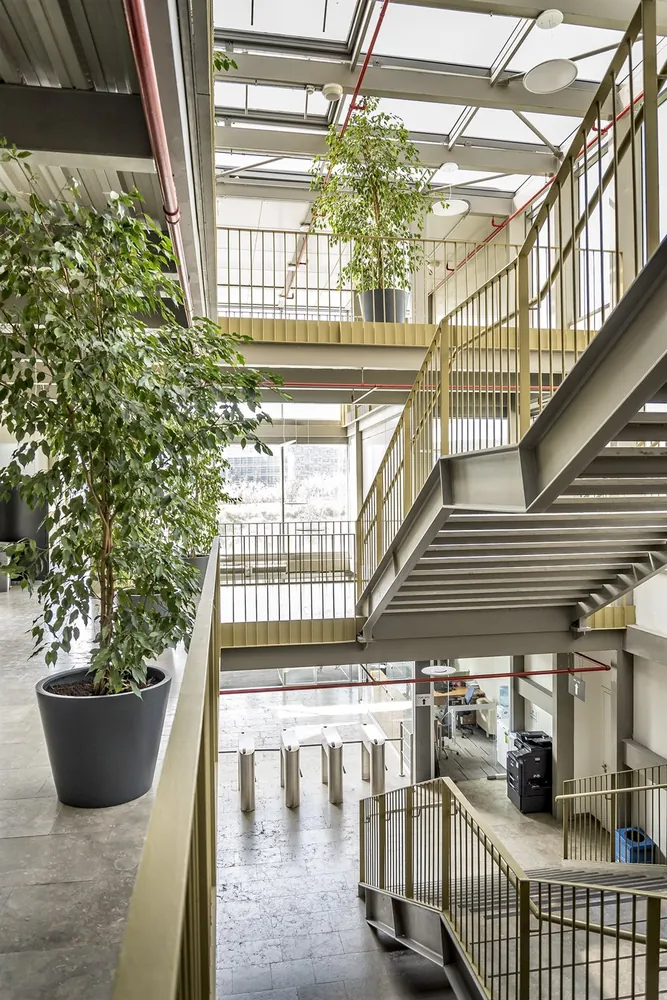
European and National Projects
Research on poverty at Özyeğin is closely tied to policy. KIRKEP, carried out with the General Directorate of Development Agencies of the Ministry of Industry and Technology, analysed production, consumption and demography across 170 districts and produced policy proposals for integrating rural and urban economies. With the GAP Regional Development Administration, the University prepared integrated investment plans for five districts in the South-East, and in 2025 it ran a dedicated rural development programme in Urfa at the Administration's request.
Women's economic participation is a recurring theme. The DOKA study surveyed 38 women's cooperatives in six provinces of the Eastern Black Sea, and a 2025 Social Impact Seed Fund project, run with International Women of Istanbul, combined skills workshops with field research among migrant women entrepreneurs. The Child Development and Learning Laboratory, founded in 2024, studies how poverty and social stress affect children's development, which links this goal to the University's work on education and health.
Baseline analysis across Phases I–III, conducted with the Eastern Black Sea Development Agency, including the KADİM mentoring network in which 13 women's cooperatives were matched with mentor institutions from the public sector, private sector and civil society.
Nine active projects led by Ayşe Ceren Bilge, Burcu Balcık, Ebru Tekin Bilbil, Ezgi Elçi, Ferhat Yıldırım with Ayşin Paşamehmetoğlu, Hannah Wen with Bochra Idris, Oya İklil Selçuk, Sevgi Usta, and Zeynep Reva.
Scopus-indexed outputs mapped to this goal in SciVal.