
Quick Access
In which areas do we generate impact?
An impact area is the answer to the question "Through which function does the university generate impact?" The literature on the social impact of universities shows that this impact arises not from a single function but from four mutually reinforcing axes. Knowledge production generates new knowledge, methods and evidence. Learning develops the carriers of impact by equipping individuals with competencies, values and responsibility. The direct relationship built with society opens the university's resources and capacity to co-production with its stakeholders. The institution itself (its structure, policies and daily operations) determines whether the value generated in the other three axes will be lasting. We call these four axes Research, Education, Community Engagement and Governance. Reading the four areas together allows us to see, within the same framework, where impact is generated and where it falls short.
Featured initiatives
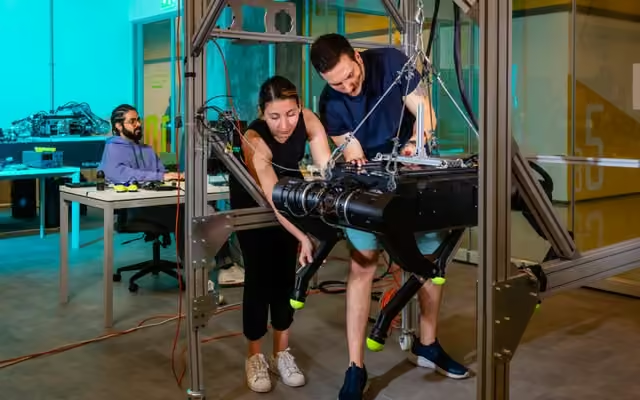
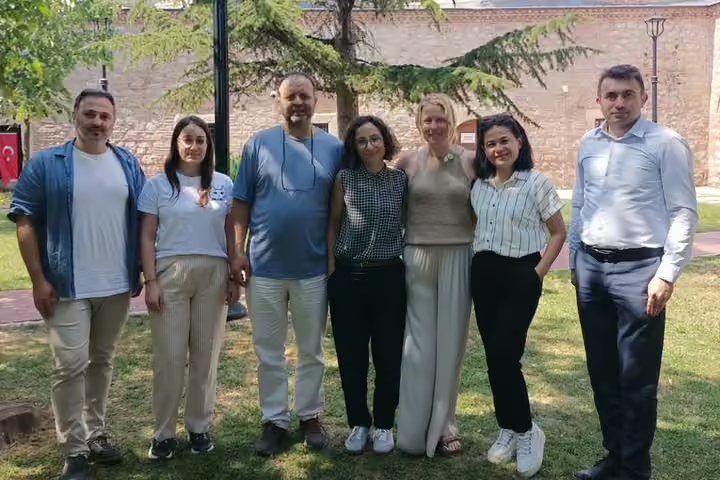 RESEARCH2026Research ProjectAGRICOLAB - Yenişehir Climate-Resilient Agriculture ProjectA project supported by the EU-Türkiye Climate Change Grant Program, led by OzU and carried out in partnership with Bursa Yenişehir Municipality; with a digital decision support and early warning system, it develops a climate…Theme: T5 · Community Empowerment and Local DevelopmentSDG 2, 11, 13View details →
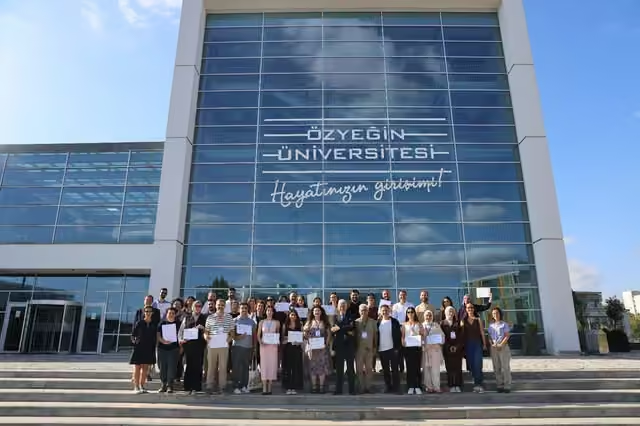
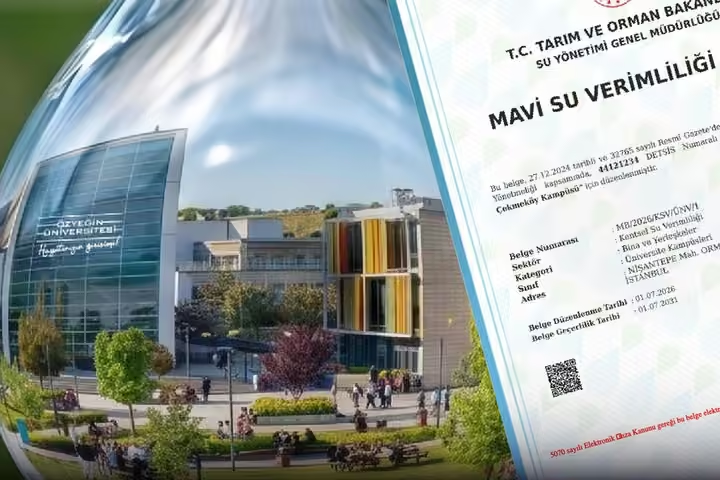 GOVERNANCE2026Certificate/AwardBlue Water Efficiency CertificateOn July 7, 2026, Özyeğin University became the first university in Türkiye to receive the Blue Water Efficiency Certificate; its holistic water management approach was recognized at the national level.Theme: T4 · Environment and Climate ActionSDG 6, 17View details →
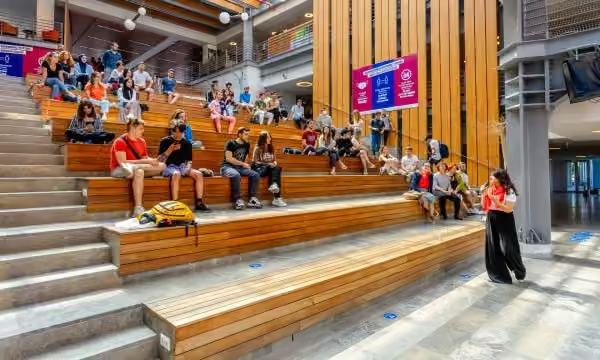
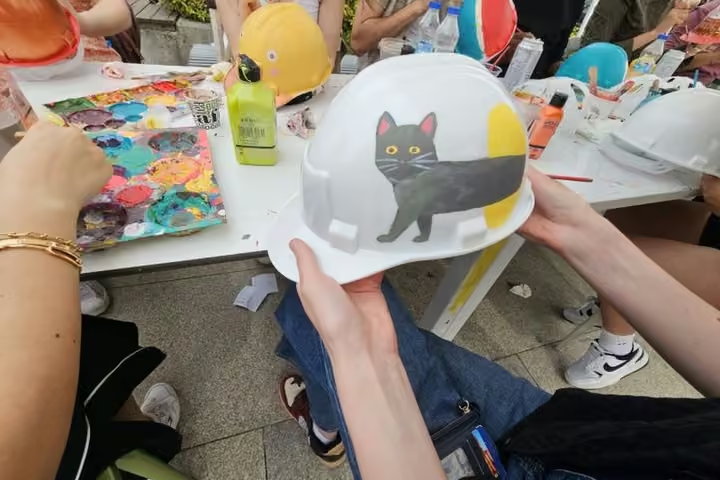 EDUCATION2026EducationOccupational Health and Safety Week Interactive TrainingsAn occupational health and safety culture was promoted through interactive methods, with hard hat painting, VR Hazard Hunt and giant Jenga activities.Theme: T2 · Social Justice, Equality, Well-being and InclusionSDG 3, 4, 8View details →
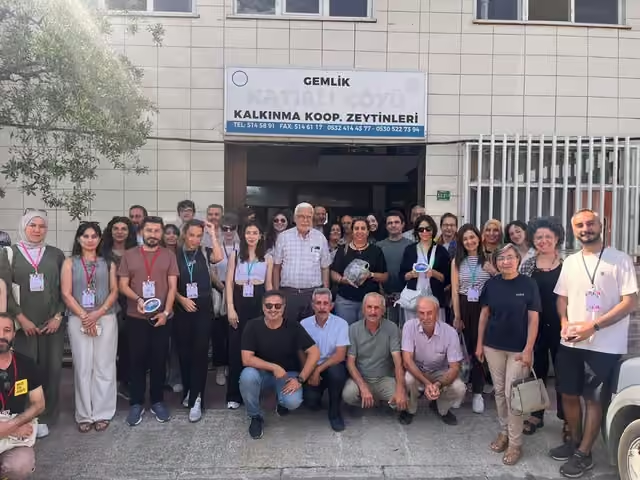
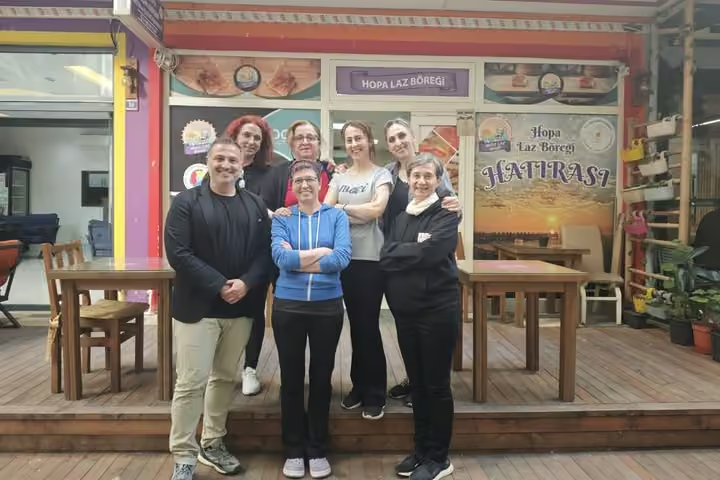 SOCIAL CONTRIBUTION2026Mentoring/ConsultingKADİM Mentoring NetworkAn advanced mentoring program in the Eastern Black Sea region in which women's cooperatives were matched with mentor institutions and supported on site.Theme: T5 · Community Empowerment and Local DevelopmentSDG 1, 5, 8View details →
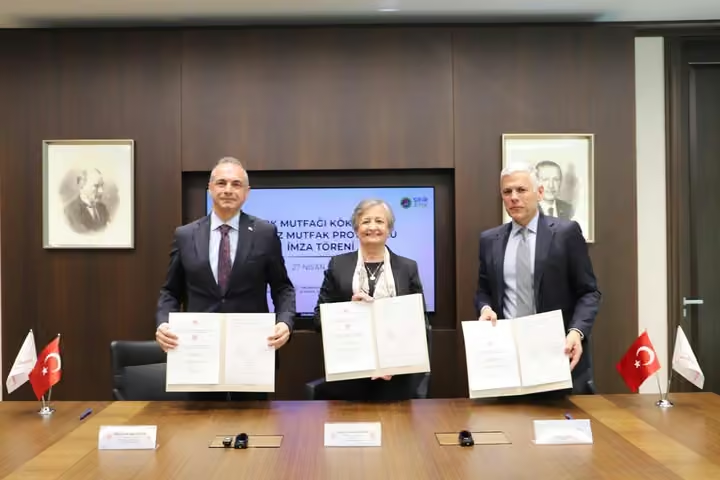 SOCIAL CONTRIBUTION2026Collaboration/ProtocolZero-Waste Turkish Cuisine ProtocolA collaboration was established to reduce food waste and integrate sustainable gastronomy practices into educational processes.Theme: T4 · Environment and Climate ActionSDG 4, 12, 17View details →
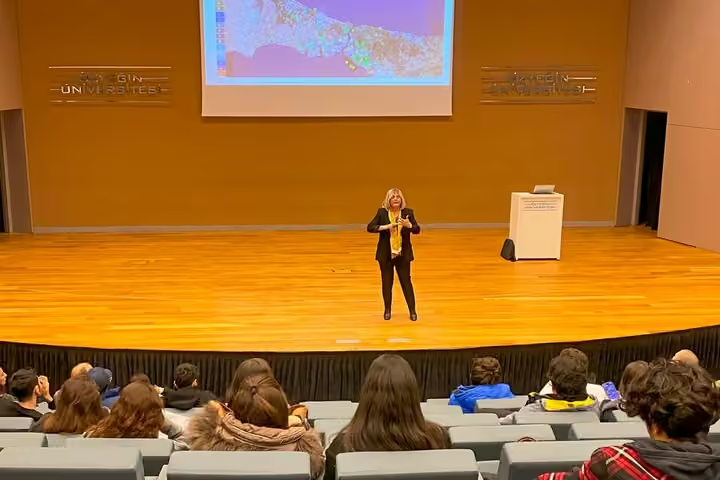 EDUCATION2026Talk/SeminarJourney of Water SeminarAn experiential learning event on the water cycle and resource efficiency. The journey of water from source to user was addressed, and the seminar was held carbon neutral.Theme: T4 · Environment and Climate ActionSDG 4, 6View details →